Newsticker

Loading Rastafari news...

Friday, February 24, 2023

Rastafari's Existential Future: Pan-Africanism to Afro-futurism

Rastafari and Afrofuturism: The Evolution of a Movement

Rastafari is a religion, theology, and philosophy that has been historically entwined and infused with Pan-African ethos from Marcus Garvey and Haile Selassie. However, it is also a dynamic, evolving, and growing movement that has strands of Afrofuturism embedded within it. Rasta is not just a religion but a response to slavery, possible annihilation, and colonial European impositions. Rasta has retained the memory of Africa but has also dared to imagine a black man's space in the future when the rest of humanity relegated African people to the trash heap of history.


Rastafarianism, which originated in Jamaica in the 1930s, as a religious and cultural movement that drews on the experiences and perspectives of people of African descent. Rastafarians believe in the divinity of Haile Selassie, the former Emperor of Ethiopia, and emphasizes the importance of community and collective action in resisting oppression.


Rastafari for me is an existential philosophy and as such the connections between black existentialism and Rastafarianism are evident in the emphasis on collective action and resistance to oppression. Both philosophies reject the idea that individuals can achieve liberation or meaning in isolation and instead emphasize the need for collective struggle and solidarity. Existentialism is a philosophical movement that emphasizes individual freedom and choice, and the need for individuals to create meaning in their lives. Black and African existentialism is a subfield of existentialism that focuses on the experiences and perspectives of black people and those of African descent. This philosophy emerged as a response to the dominant Eurocentric philosophical traditions that did not adequately address the unique experiences and perspectives of people of color.

One of the key thinkers in the development of black existentialism is Frantz Fanon, a Martinique-born psychiatrist and philosopher who lived and worked in Algeria during its struggle for independence from France. Fanon's work, particularly his books "Black Skin, White Masks" and "The Wretched of the Earth," explores the psychological impact of colonialism and racism on black people and the need for collective action to resist these forces.

Afrofuturism is a literary and cultural aesthetic that combines elements of science fiction, historical fiction, fantasy, Afrocentricity, and magic realism with non-Western cosmologies. First coined by Mark Dery in 1993, Afrofuturism addresses themes and concerns of the African Diaspora through a technoculture and science fiction lens, encompassing a range of media and artists with a shared interest in envisioning black futures that stem from Afrodiasporic experiences. Afrofuturism has four main avenues of expression: art, literature, music, and film.


Afrofuturism within music represents a diaspora of music that is non-traditional, focusing around the topic of blackness and space. This includes the work of George Clinton and his bands Parliament and Funkadelic, Jimi Hendrix, Herbie Hancock, and Sun-Ra. In literature, science, technology, art, music, and aesthetics, Afrofuturism has opened an avenue for things/issues that were seen as not so cool to be embraced, making them part and parcel of our lives. Now put in the context of all this... Max Romeo's "Am gonna put on an Ironshirt (spacesuit) and chase Satan out of Earth, Gonna send him to outer space, to find another race!"

Some examples of Afrofuturism in cinema you may have seen are Besouro, Black Panther and Wakanda Forever, Kaena the Prophecy and District 9. Ytasha Womack the author of Afrofuturism: the World of Black Sci-Fi Fantasy and Fantasy Culture, contends that with Afrofuturism “You’re a universal being that’s in a three-dimensional space. Afrofuturism allows black people to see our lives more fully than the present allows – emotionally, technologically, temporally and politically."
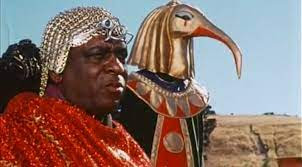

 Afrofuturism has had its impact in literature, science and technology, art, music and aesthetics. It has opened an avenue for things/issues that were seen as not so cool to be embraced. They have become part and parcel of our lives. In the 21st century, Afrofuturism continues to evolve and gain momentum. This has been pushed by writers and musicians. Some of the most notable musicians that have been at the forefront include Lupe Fiasco, Erykah Badu, Janelle Monae, Solange, and many more. Afrofuturism is now taking over the media. Young people are being exposed to and technology has allowed black people to explore their own identities. 

Rastafari is Afrofuturistic because it is a movement that has dared to imagine a future beyond the circumstances of the present. Rasta has retained the memory of Africa while also creating a space for black people to envision their place in the future. This is evident in the way that Rastafari has embraced technology and incorporated it into its culture. The use of sound systems, dubbing, and other forms of electronic music has been a staple of Rasta culture since its inception. Rastafari has also embraced the use of media to spread its message, including the use of radio stations, television shows, and social media.


Rastafari is also Afrofuturistic because it has created a space for black people to embrace their identity and culture in a world that has historically rejected them. Rastafari has created a space where black people can come together and celebrate their heritage, culture, and spirituality. This has been achieved through the creation of festivals, gatherings, and other forms of communal celebrations.

Furthermore, Rastafari has been at the forefront of the Pan-African movement, which aims to encourage and strengthen bonds of solidarity between all people of African descent. Rastafari has played an important role in advocating for the rights of black people globally and has been instrumental in promoting the ideas of Pan-Africanism. This is evident in the way that Rastafari has embraced the teachings of Marcus Garvey, who advocated for the unity and empowerment of black people globally.


In conclusion, the connections between black existentialism, Rastafarianism, Pan-Africanism, and Afrofuturism are evident in the emphasis on collective action, resistance to oppression, and the creation of new narratives and representations of black people. These philosophies and movements offer alternative visions of the future that are grounded in the experiences and perspectives of people of African descent and emphasize the importance of cultural and political unity in achieving liberation and meaning. Rastafari is an Afrofuturistic movement because it has dared to imagine a future beyond the circumstances of the present. Rasta has retained the memory of Africa while also creating a space for black people to envision their place in the future. Rastafari is techno-organic and has embraced technology, media, and communal celebrations to create a space where black people can come together and celebrate their heritage, culture, and spirituality. Rastafari has been at the forefront of the Pan-African movement, advocating for the right and rights!!!

Tuesday, April 5, 2022

Existentialism and Rastafari Philosophy - Part 1

"I was born in a system that doesn't give a fuck about you or me or the life of our lovely kids, I keep my guns load just in case thing get frig, that's just the way I live, that's me yeah-a, as is!"
~Sizzla Kalonji

What comes to mind when one considers existentialism? Many academics and philosophers will conjure images of moody and morose French thinkers in turtleneck sweaters, holding palaver at tables in cafés in Paris, puffing Gauloises and endlessly sipping coffees as they gaze into the catacombs of the humanity's collective soul. However, there is more to it than that. Existentialism continues to be the most popular and best recognized school of philosophy, and consequently what I wrote my UWI, Mona Philosophy B.A. thesis on, way back in 2004. I wish I could reread that paper now. I believe it was something like Rastafari as Existential philosophy.

YHNK

When I wrote my paper I really wrote it from a perspective of justifying Rastafari as existential philosophy in a new sense rather than examine it as an ideology which follows the tradition of black existentialism, well maybe I did do an Aime Césaire and Franz Fanon link but knowing what I know now, I could have made a more robust connection. Or maybe I hope I did after it was reviewed for edits and such. But where much of the black existentialism and mid 20th century existentialism was atheist in nature and departed from it's religious roots. Rastafari while incorporating Akan existential notions of self carries black existentialism back to a religious place while maintaining and advancing it in modern times and even venturing into the realm of Afrofuturism, as we consider our existential plight in the future. But what exactly is existentialism defined as: A philosophy that emphasizes the uniqueness and isolation of the individual experience in a hostile or indifferent universe, regards human existence as unexplainable, and stresses freedom of choice and responsibility for the consequences of one's acts, by The American Heritage® Dictionary of the English Language, 5th Edition.

Existentialism had a religious birth in Denmark and went through Atheist reform in France. Similarly precolonial West African religious traditions and African phenomenology birth a unique African existentialism and one could contend or argue that many Black or Africana existential philosophies (for example, Lewis Gordon’s Africana philosophy of existence, Frantz Fanon’s Sociogeny, and Howard Thurman’s Religious Thought) were somewhat Europeanized, and often secularized, versions of precolonial West African spirituo-analysis, phenomenology and existentialism. Just as European existential philosophy undergo atheist transformation it seems to have been mirrored in the African existentialism's transition to modern black or Africana existential philosophy.

Rastafari Art

With it being clear that existentialism wasn't birthed in France as most tend to think but actually in the 19th century in Denmark, with the highly unorthodox Christian thinker Søren Kierkegaard. He introduced the idea that in our journey through life we have the opportunity to make a ‘leap of faith’, to commit to a belief even though the evidence isn’t there. The majority of later existentialists were not religious. Yet pervasive in their work is the idea and narrative of the hero's choice and dedicated path, which sometimes turns out to be a mistake with serious consequence. This is a persistent current running through existentialist literature and plays. Existentialism, in contrast to much preceding philosophy, insists that existence precedes essence. In other words, there is no such thing as an immutable essence of a human being. Instead, first of all we exist. A notion not too far from Mr. Des Cartes "I think therefore I am."

Existentialism digresses from Des Cartes' skepticism to contend that at birth we are foist into a universe that doesn’t much care about us, and we have to make the best of ourselves – individually and in relation to one another – as we go along. So how does existentialism fit within the context of the African diaspora and its descendants dispersed throughout the Americas who have been facing approximately five centuries of white bigotry, misunderstanding, and racism. Especially as, we strive in our own way to be an acknowledged human beings in a system that only wants to make us less than one. A highly intelligent peoples and civilization, dismantled, enslaved and forced into unacceptable circumstances, yet persisting to recreate ourselves individually and secure some manner of respect and dignity. Alienation and the human condition are crucial issue to the ethos of existentialism; alienation is something we of African descent know so well. An alienation identified in Reggae songs like "Jamaican in New York" by Shinehead which covers and recaptures the sense of alienation identified by Sting in his original "English Man in New York"... as they both croon "I am an alien in New York."

Alienation at The Rivers of Babylon

"How can we sing King Alpha's song in a strange land?"

The heyday of existentialist thought may be over, but many people still find that existentialism resonates with literature and movies of all kinds, and sometimes with real life too. In particular, the idea that meaning and values are not sewn into the fabric of the universe but that we must invent them for ourselves has become ever more widely held and during the middle decades of the twentieth century, existentialism dominated the European philosophical and literary scene. Prominent theorists such as Jean Paul Sartre, Albert Camus, and Maurice Merleau-Ponty put the experience of history, alienation, and the body at the center of philosophical and literary life. It should be no surprise, then, that existentialism appealed to so many Afro-Caribbean and African-American thinkers of the same period and after. Black thinkers critically transformed European existentialist ideas as is evidenced in the work of black existentialists such as Aime Césaire, Frantz Fanon, George Lamming, Richard Wright and Wilson Harris.

Elder Empresses from Bad Friday Incidentt
The enslaved and colonized people of the America are credited with a unique cognitive, ethical and social agency in the face of a structure that presents different existential challenges to the ability of the Caribbean people to realize their person-hood and live a worthwhile life. The Caribbean people have always possessed agency and have used this to overcome existential challenges at different phases of their history. The question whether they have always succeeded in doing this is a different question.

Rastafari as a manifestation of African retention is the memory of the Jamaican people and is the reminder to the children of enslaved people of who we were and where we are going. Rastafari retains African philosophy and philosophical threads in the Caribbean ethos. In our current circumstance Rastafari works to prod, rattle and rethink our thinking (Unlearn), to current our "Miseducation" as Lauryn Hill put it, a "miseducation" that has lead to systemic disinformation and misinformation in the west. Rastafari serve to inform and change our practices as humans in institutions, politics, and the personal, legal and social paradigms. Rastafari via livity (lifestyle) demonstrate how African, Aboriginal, native ideology and ethos be can used for transformation of existence, anti-racism and critiques of alterity, resistance, pedagogy as well as political action. Rastafari is living philosophy which maintains the cognitive link from African phenomenological and spirituo-analytical traditions via African retention, yet it also carries on the modern philosophical quests and issues of modern black existentialists. A philosophy that vivifies a culture, a region, music, arts and religion. Rastafari activists, academics and actors can be found at the vanguard of discourse on decoloniality, reparations, the politics of race, gender and identity, among others.

"The power of philosophy floats through my head, Light like a feather, heavy as lead"
—Bob Marley

"Emacipate yourselves from mental slavery, none but our self can free our minds"
~Bob Marley

"Babylon gi dem a ride fi dem money get dem funny, and den brainwash dem pon dem western journey"
~Sizzla Kalonji

In Black Skin, White Masks, Fanon argued that the colonial situation created an “existential deviation” in the psyche of the Afro-Caribbean. This deviation was the result of racially induced “aberrations of affect” that relocated the Afro-Caribbean in an antiblack world from which he or she must be extricated. I n I contend Rastafari is the movement that engenders that extrication. If one takes a hermeneutical, phenomenological approach to the Sacred Scriptures emerging from Rastafari then one will see that it is a “Third World” Liberation Theology. Rastafari theology focuses on a postcolonial interpretation and reimagination of rituals. The adoption in Rastafari livity of the Bible and of apocryphal books such as the Kebra Nagast, The Holy Piby, and The Promised Key explores the meaning of Black identity and of Liberation Theology.

The usage of the term "Babylon" in Rastafari liberation discourse is distinct from the exodus motif normally associated with theologies of liberation. This usage comes mainly from Marcus Garvey's notion of a "Black Zionism" that pictured Zion as a place of restoration. In its usage in the prophetic books of Jeremiah and Isaiah, Zion serves as the foil for Babylon and in many instances the two topoi are paired. The Rastafari reading of the biblical texts, more so the prophets and not the book of Revelation, generated the notion of Babylon as the evil empire; any place outside of Africa as Babylon, and the British Empire as Babylon with Zion as its counterpoint. Rastafari repurposes the dark matters of existence in Babylon– anxiety, depression, despair, death – into the service of self-flourishing idea of Zion.

My Black Existential Reading List:

  • The Souls of Black Folk  -  William Edward Burghardt Du Bois
  • Black Skin, White Masks  -  Frantz Fanon
  • Toward the African Revolution  -  Frantz Fanon
  • Eight Men: Short Stories  -  Richard Wright
  • Existentia Africana  -  Lewis R. Gordon
  • Notebook of a Return to the Native Land  -  Aime Cesaire


This article explores the intersection of #Existentialism and #Rastafari philosophy, delving into topics such as #Philosophy, #Spirituality, #PersonalGrowth, #Identity, #Consciousness, #ExistentialCrisis, #SelfDiscovery, #IndividualFreedom, #SocialJustice, #Ethics, #Morality, #ExistentialDread, #Redemption, #ExistentialAngst, #Enlightenment, #InnerPeace, #SelfRealization, and #UniversalLove.

Saturday, July 28, 2018

Heartbreak: Rasta Errol’s Tale

“Hearts can break. Yes, hearts can break. Sometimes I think it would be better if we died when they did, but we don't.”
~Stephen King, Hearts in Atlantis

“Do you think, because I am poor, obscure, plain and little, I am soulless and heartless? You think wrong! - I have as much soul as you, - and full as much heart!”
~Charlotte Brontë, Jane Eyre


My heart breaks often at least 3 times a year… that’s the way it is in Jamaica. Friends die. Yes they do, and die tragically too. Last year at this time I lost a sistren, Anieta Robinson. Her struggle was a short fight with cancer. By the time I heard and bought turmeric and noni to go look for her, she was gone. So she has been in my meditation as of late, especially since from time to time I review my role in my communities, be it the Rastafari community, my geographical space, my family or the artist community. So while these thoughts are floating about in my mind that at 4am while waiting for the Knutsford Express to go to a seminar on Monitoring and Evaluation, in Kingston on behalf of The Rastafari Coral Garden Benevolent Society, that a breddrin and member who is going to Kingston as well says, Yannick, yuh hear wah happen to Rasta Errol? Oh how I have grown to hate that question… the answer when I say no, is never him win Lotto! Nope; the answer 9 time out of ten is “him dead”. This occasion was scarcely different. When I said “no” the answer was, “Them stab him up a Arcade”. And as I feel the old familiar jolt of shock, all I can think is AGAIN!

So now as I am supposed to be having the time of my life watching Putin’s World Cup, my mind is a constant kaleidoscope of emotion, racing back and forth from planning the future, to grief to, happy as Ronaldo and Mbappi blazes the score sheets, celebrating Senegal, weeping for Germany, remembering Errol, Anieta, Likkle Dread, Chrissy, the army of fallen soldiers, writing proposals, chasing paper, being there for my daughter, considering the future of the nation, the future of the race, the future of my family, am I hovering close to St. James Infirmary, is there a pension for me, will I escape poverty, what is the future for me when I become an elder??? As all this is churning in my mind, my heartbreaks for myself, it breaks for Errol, it breaks when I consider the existential plight of Rastafari. Yet from this I reaffirm, why it is I am a community activist, why I am a member of the Rastafari Coral Gardens Benevolent Society!

The purpose of the organization is to alleviate the distress of the vulnerable Rastafari community. We provide relief and care to those who to varying degree have been excluded from society, disenfranchised or have been rendered voiceless – the elderly, neglected and victims of the 1963 atrocity. As a result of the actions of a few persons in Coral Gardens in 1963, the entire Rastafari community was officially targeted by the State of newly-independent Jamaica. This led to extreme brutality, imprisonment and death of many Rastafari sons and daughters across Jamaica by the police, army and other citizens of Jamaica. The Rastafari Coral Gardens Benevolent Society was registered under the Friendly Societies Act to keep alive the memory of the Coral Gardens atrocities and the denial of the fundamental human rights and freedoms of members of the Rastafari community.

Rasta Errol at 60 years old was a member of the RCGBS. At his age he was more than qualified to be a beneficiary. The last two times I saw Errol was at UWI out by the airport, we had been at a seminar for Capacity Building by Mona Social Services (MSS). The last time would be Sunday June 10, 2018 at The People’s Arcade at an RCGBS meeting. There he handed me some herb and a bottle of Spurlina. He showed me his MSS certificate which he had gotten framed. I was thankful as someone who ought to be getting was still giving… I didn't know it would be the last time I would see him.

As I perused the INTERNET to possibly understand what the media may know I found this meager report of a mighty man. “Reports from the Barrett Town Police are that, about 9am [on Tuesday, June 12], Cooke was walking in the People’s Arcade when he was pounced on by a group of men armed with knives, who attacked him and inflicted several wounds to his upper body.” The JCF stated that Cooke was taken to hospital where he died while undergoing treatment. Investigations are continuing. Sometimes people wonder within the Rastafari community and outside it… if our collective efforts are necessary or valid… it is lives like Errol’s, life lived exceptionally is why we must organize and central. It is to prevent the ending of lives in such tragedies and tragic manner is why we must organize to secure the future of Jamaica's pan African heart. SELAH.

Sunday, October 23, 2016

Rastafari Dreams in Afrofuturistic Colors


I have been dreaming.... Dreaming of a closer knit black family and community that can resist the vagaries of creation and the attacks from the outside! Dreaming of a black kingdom where every black mind can cast its energy and thought... The closest things to black Utopia and Mecca!

I am tired of feeling of a member of no major race... I swear every Chinese in Jamaica is a member of the Chinese Benevolent Association and has their eye and mind turned to China, same for the Indian he is either a Muslim or a Hindu with their mind turn to the motherland in many ways... at times mi feel like a me a grasp alone fi Africa while the rest of JA nah stretch for her hands n Africa nah too reach out nor unify... I feel like part of a truly scattered and lost race of people who don't even know we are a race!

What stories will our children hear, what knowledge passed on, what notions of identity culture and reality... have we done enough to rescue the future, to secure and negotiate a future we are ok with for them a future still malleable enough for them to impress upon it an even newer and better black race.


You know a great disappointment of mine... there is no central Africa cable network where I can have a host of channels to watch that cover strictly Africa and the diaspora... where I can watch Good morning Nigeria Ghana Gambia Morocco Tanzania South Africa, where mi can see local African news, see concerts music videos, local Africa documentaries and cartoons and our collective perspective... an android box chock full of Africa!

I cannot help but express this deep yearning for a stronger sense of community and unity within the black population, both locally and globally. I write to highlight the frustrations of feeling disconnected from one's own race while witnessing other ethnic groups with more pronounced ties to their heritage. I cannot help but laments the lack of resources that would allow for greater exposure to African culture and news, and the potential impact of that exposure on future generations.

To delve further into this topic, it's important to recognize that the struggle for black unity is not a new concept. For centuries, black people have faced oppression, exploitation, and marginalization, often leading to a fractured sense of identity and community. From the African diaspora to present-day issues such as police brutality and systemic racism, there are countless examples of how the black population has been systematically excluded and discriminated against.

However, despite these challenges, there have been numerous efforts to promote unity and solidarity within the black community. This includes grassroots movements, social organizations, and cultural initiatives that aim to reclaim and celebrate black culture and history. From the Civil Rights Movement to the Black Lives Matter movement (though I have my philosophical differences with that group), there is a rich legacy of activism and advocacy that has brought about positive change and progress.

At the same time, it's clear that there is still much work to be done. While many individuals and groups are actively working towards a more unified black community, there are still many obstacles to overcome. This includes ongoing issues such as colorism, internalized racism, and economic inequality that can further divide the black population. Moreover, the global pandemic has highlighted the disproportionate impact of health and economic disparities on black communities, underscoring the need for greater social and political change.

In terms of media representation, there have been some strides towards greater visibility and representation of black perspectives and experiences. The emergence of streaming services and digital media has allowed for more diverse voices to be heard, with shows such as "Black-ish" and "Atlanta" showcasing the complexity and diversity of black life. However, there is still a lack of mainstream media outlets that are dedicated solely to highlighting African and black diaspora cultures.

Despite these challenges, there is reason to be optimistic about the future of the black community. Through collective action and continued advocacy, there is the potential to create a more just, equitable, and inclusive society. By celebrating and elevating black culture and history, we can create a more unified and empowered community that is better equipped to tackle the challenges ahead.

The potential for greater integration of black business and the black diaspora with Africa is immense. The African continent is rich in natural resources and is home to some of the world's fastest-growing economies. A greater facilitation of trade between black diaspora communities and African countries would not only benefit both parties economically, but also strengthen cultural ties and promote a shared sense of identity.

One way to foster this integration is through the creation of platforms that connect black businesses and entrepreneurs across the diaspora with opportunities in Africa. This could involve the establishment of trade missions, business incubators, and networking events that bring together individuals and organizations with a shared interest in promoting economic growth and development.

In addition to business opportunities, there is also great potential for greater media representation of the black diaspora and African cultures. As earlier highlighted, there is a need for more diverse media outlets that showcase African and diaspora perspectives. A diaspora-wide media platform, such as an African Diaspora Netflix or cable network, would provide a space for a diverse range of voices and experiences to be heard.

Afrofuturism is another important aspect of black culture and the black future. This artistic and cultural movement imagines a future in which black people play a central role in shaping technology, society, and culture. By incorporating elements of African spirituality, science fiction, and fantasy, Afrofuturism challenges dominant narratives and celebrates black creativity and imagination.

Finally, sister city twinning programs between African and black diaspora cities would strengthen cultural ties and promote greater collaboration and exchange. Through these programs, cities could share best practices in areas such as urban planning, community development, and cultural preservation. This would not only benefit the local communities involved, but also contribute to a greater sense of global black solidarity.

Overall, greater integration between black diaspora communities and Africa has the potential to foster greater economic and cultural exchange, promote diverse media representation, and inspire new visions for the black future. By embracing the richness and diversity of black cultures and histories, we can build a stronger and more unified global black community that is better equipped to tackle the challenges of the future.

Here is to an #AfricanCableNetwork and an #AfroCaribbeanMedia... #africaunite!


#BlackDiasporaUnity, #AfricaDiasporaIntegration, #BlackBusinessOpportunities, #Afrofuturism, #DiasporaMediaRepresentation, #SisterCityTwinning, #GlobalBlackSolidarity, #BlackCulturalExchange, #BlackEconomicDevelopment, #BlackFutureVisioning


Sunday, June 26, 2016

The Criminalization of African Spirituality: Part 1

"Democracy means that people can say what they want to. All the people. It means that they can vote as they wish. All the people. It means that they can worship God in any way they feel right, and that includes Christians and Jews and voodoo doctors as well."
~Dalton Trumbo
 

For most of my life Obeah in Jamaica has been a taboo. Scoffed at by academics and intellectuals rooted deep in empiricism and cynicism. The Church associates Obeah with spiritual wickedness and evil, skeptics tend to think it is used to defraud vulnerable people like the snake oil man to swindle and bamboozle. In my family it was the butt of jokes and was the stuff of old time superstition.For me the stuff Obeah was like the mythos of slavery... a literature populated with Rolling Calves, Black Heart men, Ananse, masks, Pocomania, Kumina, Revival, Jonkunnu, Bats(what Jamaican call moths), owls, D. Lawrence, Bible and Key and Maccabees Bibles.

In a more academic light... Obeah is a term used in the West Indies to refer to folk magic, sorcery, and religious practices developed among West African slaves, specifically of Igbo origin. Obeah's history is similar to that of other Afro-American religions including Palo, Vodou, Santería, and Hoodoo. Obeah is practiced in Suriname, Cuba, Jamaica, Trinidad and Tobago, Dominica, Guyana, Grenada, Belize, The Bahamas, and other Caribbean nations. Enslaved Africans brought spiritual practices to the Caribbean that included folk healing and a belief in magic for good and for evil to opposition.

Vodun means spirit in the Fon and Ewe languages, pronounced [vodá¹¹] with a nasal high-tone u; also spelled Vodon, Vodoun, Vodou, Voudou, Voodoo, etc. is practiced by the Ewe people of eastern and southern Ghana, and southern and central Togo; and the Kabye people, Mina people, and Fon people of southern and central Togo, southern and central Benin. It is also practiced by some Gun (Gbe) people of Lagos and Ogun in southwest Nigeria.

It is distinct from the various African traditional religions in the interiors of these countries and is the main source of religions with similar names found among the African Diaspora in the western hemisphere such as Haitian Vodou; Puerto Rican Vodú; Cuban Vodú; Dominican Vudú; Brazilian Vodum; and Louisiana Voodoo. All of these closely related faiths are syncretized with Christianity to various degrees and with the traditional beliefs of the Kongo people and Indigenous American traditions.

Now the term 'Obeah' is first found in documents from the early 18th century, as in its connection to Nanny of the Maroons, but discussion of it becomes more frequent when it was made illegal in Jamaica after Tacky's War, in which an Obeah-man provided advice to the rebels. In 1787 a letter to an English newspaper referred to "Obiu-women" interpreting the wishes of the dead at the funeral of a murdered slave in Jamaica: a footnote explained the term as meaning "Wise-women".

A continuing source of white anxiety related to Obeah was the belief that practitioners were skilled in using poisons, as mentioned in Matthew Lewis's Journal of a West India Proprietor. The European world had equated Black and African Spirituality with their own history of wizards and witchcraft and necromancy. Thousands of people in the Caribbean have been subject to prosecution for their religious and spiritual healing practice, since the first law against Obeah was passed in Jamaica in 1760 then in the anti-Obeah law passed in Barbados in 1818 there was the specific forbidding of the possession of "any poison, or any noxious or destructive substance"during slavery, until the recent past.

A doctor who examined the medicine chest of an Obeah man arrested in Jamaica in 1866 identified white arsenic as one of the powders in it, but could not identify the others. The unnamed correspondent reporting this affirmed "The Jamaica herbal is an extensive one, and comprises some highly poisonous juices, of which the Obeah men have a perfect knowledge."


During the mid 19th century the appearance of a comet in the sky became the focal point of an outbreak of religious fanatical millennialism among the Myal men of Jamaica. Spiritualism was at that time sweeping the English-speaking nations as well, and it readily appealed to those in the Afro-Caribbean diaspora, as spirit contact, especially with the dead, is an essential part of many African religions. During the conflict between Myal and Obeah, the Myal men positioned themselves as the "good" opponents to "evil" Obeah. They claimed that Obeah men stole people's shadows, and they set themselves up as the helpers of those who wished to have their shadows restored.

Myal men contacted spirits in order to expose the evil works they ascribed to the Obeah men, and led public parades which resulted in crowd-hysteria that engendered violent antagonism against Obeah men. The public "discovery" of buried Obeah charms, presumed to be of evil intent, led on more than one occasion to violence against the rival Obeah men. Laws were passed that limited both Obeah and Myal traditions but due to the outrages perpetrated by the mobs of Myalists, the British government of Jamaica sent many Myal men to prison, and this, along with the failure of their millennialist prophecies. 

Obeah laws, which still exist in many Caribbean countries, there have also been laws against specific religious groups, including the Spiritual Baptist faith, which was outlawed for a substantial part of the twentieth century in Trinidad and Tobago, St. Vincent, and Grenada. Other people faced prosecution for independent religious and healing work under laws against practicing medicine without a license, vagrancy, and ‘night noises’, among others.

  • 1760: In response to a major slave rebellion, the colonial government outlaws Obeah for the first time in the Caribbean, with the Act to Remedy the Evils arising from Irregular Assemblies of Slaves, defining Obeah as: "The wicked Art of Negroes... pretending to have Communication with the Devil and other evil spirits"
  • 1898: Under the Obeah Law practitioners face 12 months in jail and flogging. An Obeah practitioner is defined as: "Any person who, to effect any fraudulent or unlawful purpose, or for gain, or for the purpose of frightening any person, uses, or pretends to use any occult means, or pretends to possess any supernatural power or knowledge"
  • 1908: Parliament passes the Medical Law, which was intended to regulate medical practice, but was also used frequently in cases to define difference between medicine and Obeah