
Rastafari and Afrofuturism: The Evolution of a Movement
Rastafari is a religion, theology, and philosophy that has been historically entwined and infused with Pan-African ethos from Marcus Garvey and Haile Selassie. However, it is also a dynamic, evolving, and growing movement that has strands of Afrofuturism embedded within it. Rasta is not just a religion but a response to slavery, possible annihilation, and colonial European impositions. Rasta has retained the memory of Africa but has also dared to imagine a black man's space in the future when the rest of humanity relegated African people to the trash heap of history.

Rastafarianism, which originated in Jamaica in the 1930s, as a religious and cultural movement that drews on the experiences and perspectives of people of African descent. Rastafarians believe in the divinity of Haile Selassie, the former Emperor of Ethiopia, and emphasizes the importance of community and collective action in resisting oppression.

Rastafari for me is an existential philosophy and as such the connections between black existentialism and Rastafarianism are evident in the emphasis on collective action and resistance to oppression. Both philosophies reject the idea that individuals can achieve liberation or meaning in isolation and instead emphasize the need for collective struggle and solidarity. Existentialism is a philosophical movement that emphasizes individual freedom and choice, and the need for individuals to create meaning in their lives. Black and African existentialism is a subfield of existentialism that focuses on the experiences and perspectives of black people and those of African descent. This philosophy emerged as a response to the dominant Eurocentric philosophical traditions that did not adequately address the unique experiences and perspectives of people of color.
One of the key thinkers in the development of black existentialism is Frantz Fanon, a Martinique-born psychiatrist and philosopher who lived and worked in Algeria during its struggle for independence from France. Fanon's work, particularly his books "Black Skin, White Masks" and "The Wretched of the Earth," explores the psychological impact of colonialism and racism on black people and the need for collective action to resist these forces.
Afrofuturism is a literary and cultural aesthetic that combines elements of science fiction, historical fiction, fantasy, Afrocentricity, and magic realism with non-Western cosmologies. First coined by Mark Dery in 1993, Afrofuturism addresses themes and concerns of the African Diaspora through a technoculture and science fiction lens, encompassing a range of media and artists with a shared interest in envisioning black futures that stem from Afrodiasporic experiences. Afrofuturism has four main avenues of expression: art, literature, music, and film.

Afrofuturism within music represents a diaspora of music that is non-traditional, focusing around the topic of blackness and space. This includes the work of George Clinton and his bands Parliament and Funkadelic, Jimi Hendrix, Herbie Hancock, and Sun-Ra. In literature, science, technology, art, music, and aesthetics, Afrofuturism has opened an avenue for things/issues that were seen as not so cool to be embraced, making them part and parcel of our lives. Now put in the context of all this... Max Romeo's "Am gonna put on an Ironshirt (spacesuit) and chase Satan out of Earth, Gonna send him to outer space, to find another race!"
Some examples of Afrofuturism in cinema you may have seen are Besouro, Black Panther and Wakanda Forever, Kaena the Prophecy and District 9. Ytasha Womack the author of Afrofuturism: the World of Black Sci-Fi Fantasy and Fantasy Culture, contends that with Afrofuturism “You’re a universal being that’s in a three-dimensional space. Afrofuturism allows black people to see our lives more fully than the present allows – emotionally, technologically, temporally and politically."
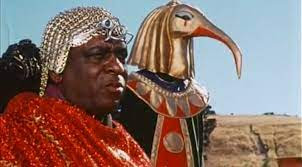
Afrofuturism
has had its impact in literature, science and technology, art, music and
aesthetics. It has opened an avenue for things/issues that were seen as
not so cool to be embraced. They have become part and parcel of our
lives.
In the 21st century, Afrofuturism continues to evolve and gain momentum.
This has been pushed by writers and musicians. Some of the most
notable musicians that have been at the forefront include Lupe Fiasco,
Erykah Badu, Janelle Monae, Solange, and many more. Afrofuturism is now taking over the media.
Young people are being exposed to and technology has allowed black
people to explore their own identities.
Rastafari is Afrofuturistic because it is a movement that has dared to imagine a future beyond the circumstances of the present. Rasta has retained the memory of Africa while also creating a space for black people to envision their place in the future. This is evident in the way that Rastafari has embraced technology and incorporated it into its culture. The use of sound systems, dubbing, and other forms of electronic music has been a staple of Rasta culture since its inception. Rastafari has also embraced the use of media to spread its message, including the use of radio stations, television shows, and social media.

Rastafari is also Afrofuturistic because it has created a space for black people to embrace their identity and culture in a world that has historically rejected them. Rastafari has created a space where black people can come together and celebrate their heritage, culture, and spirituality. This has been achieved through the creation of festivals, gatherings, and other forms of communal celebrations.
Furthermore, Rastafari has been at the forefront of the Pan-African movement, which aims to encourage and strengthen bonds of solidarity between all people of African descent. Rastafari has played an important role in advocating for the rights of black people globally and has been instrumental in promoting the ideas of Pan-Africanism. This is evident in the way that Rastafari has embraced the teachings of Marcus Garvey, who advocated for the unity and empowerment of black people globally.

In conclusion, the connections between black existentialism, Rastafarianism, Pan-Africanism, and Afrofuturism are evident in the emphasis on
collective action, resistance to oppression, and the creation of new
narratives and representations of black people. These philosophies and
movements offer alternative visions of the future that are grounded in
the experiences and perspectives of people of African descent and
emphasize the importance of cultural and political unity in achieving
liberation and meaning. Rastafari is an Afrofuturistic movement because it has dared to imagine a future beyond the circumstances of the present. Rasta has retained the memory of Africa while also creating a space for black people to envision their place in the future. Rastafari is techno-organic and has embraced technology, media, and communal celebrations to create a space where black people can come together and celebrate their heritage, culture, and spirituality. Rastafari has been at the forefront of the Pan-African movement, advocating for the right and rights!!!
