

Showing posts with label ancestoral. Show all posts
Showing posts with label ancestoral. Show all posts
Wednesday, March 1, 2023
The Health Benefits of Soursop
Looking for a delicious and nutritious way to boost your health? Look no further than soursop! Our new infographic is packed with information on the amazing health benefits of this tropical fruit, from its anti-cancer and anti-inflammatory properties to its immune system boosting and digestive health benefits. Check out our infographic to learn more about soursop and how you can incorporate it into your diet!
 #Soursop #Graviola #TropicalFruit #HealthyEating #Nutrition #AntiCancer
#AntiInflammatory #ImmuneSystemBoost #DigestiveHealth #HealthyLiving
#HealthyLifestyle #Superfood #HealthyRecipes #FoodAsMedicine
#HealthyFruit #HealthySnack #HealthBenefits #NaturalRemedy #HealthyTips
#EatClean #WholeFoods #PlantBased #HealthyFoodie #HealthAndWellness
#Soursop #Graviola #TropicalFruit #HealthyEating #Nutrition #AntiCancer
#AntiInflammatory #ImmuneSystemBoost #DigestiveHealth #HealthyLiving
#HealthyLifestyle #Superfood #HealthyRecipes #FoodAsMedicine
#HealthyFruit #HealthySnack #HealthBenefits #NaturalRemedy #HealthyTips
#EatClean #WholeFoods #PlantBased #HealthyFoodie #HealthAndWellness
Friday, February 24, 2023
Rastafari's Existential Future: Pan-Africanism to Afro-futurism
Rastafari and Afrofuturism: The Evolution of a Movement
Rastafari is a religion, theology, and philosophy that has been historically entwined and infused with Pan-African ethos from Marcus Garvey and Haile Selassie. However, it is also a dynamic, evolving, and growing movement that has strands of Afrofuturism embedded within it. Rasta is not just a religion but a response to slavery, possible annihilation, and colonial European impositions. Rasta has retained the memory of Africa but has also dared to imagine a black man's space in the future when the rest of humanity relegated African people to the trash heap of history.

Rastafarianism, which originated in Jamaica in the 1930s, as a religious and cultural movement that drews on the experiences and perspectives of people of African descent. Rastafarians believe in the divinity of Haile Selassie, the former Emperor of Ethiopia, and emphasizes the importance of community and collective action in resisting oppression.

Rastafari for me is an existential philosophy and as such the connections between black existentialism and Rastafarianism are evident in the emphasis on collective action and resistance to oppression. Both philosophies reject the idea that individuals can achieve liberation or meaning in isolation and instead emphasize the need for collective struggle and solidarity. Existentialism is a philosophical movement that emphasizes individual freedom and choice, and the need for individuals to create meaning in their lives. Black and African existentialism is a subfield of existentialism that focuses on the experiences and perspectives of black people and those of African descent. This philosophy emerged as a response to the dominant Eurocentric philosophical traditions that did not adequately address the unique experiences and perspectives of people of color.
One of the key thinkers in the development of black existentialism is Frantz Fanon, a Martinique-born psychiatrist and philosopher who lived and worked in Algeria during its struggle for independence from France. Fanon's work, particularly his books "Black Skin, White Masks" and "The Wretched of the Earth," explores the psychological impact of colonialism and racism on black people and the need for collective action to resist these forces.
Afrofuturism is a literary and cultural aesthetic that combines elements of science fiction, historical fiction, fantasy, Afrocentricity, and magic realism with non-Western cosmologies. First coined by Mark Dery in 1993, Afrofuturism addresses themes and concerns of the African Diaspora through a technoculture and science fiction lens, encompassing a range of media and artists with a shared interest in envisioning black futures that stem from Afrodiasporic experiences. Afrofuturism has four main avenues of expression: art, literature, music, and film.

Afrofuturism within music represents a diaspora of music that is non-traditional, focusing around the topic of blackness and space. This includes the work of George Clinton and his bands Parliament and Funkadelic, Jimi Hendrix, Herbie Hancock, and Sun-Ra. In literature, science, technology, art, music, and aesthetics, Afrofuturism has opened an avenue for things/issues that were seen as not so cool to be embraced, making them part and parcel of our lives. Now put in the context of all this... Max Romeo's "Am gonna put on an Ironshirt (spacesuit) and chase Satan out of Earth, Gonna send him to outer space, to find another race!"
Some examples of Afrofuturism in cinema you may have seen are Besouro, Black Panther and Wakanda Forever, Kaena the Prophecy and District 9. Ytasha Womack the author of Afrofuturism: the World of Black Sci-Fi Fantasy and Fantasy Culture, contends that with Afrofuturism “You’re a universal being that’s in a three-dimensional space. Afrofuturism allows black people to see our lives more fully than the present allows – emotionally, technologically, temporally and politically."
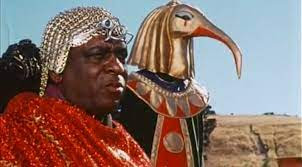
Afrofuturism
has had its impact in literature, science and technology, art, music and
aesthetics. It has opened an avenue for things/issues that were seen as
not so cool to be embraced. They have become part and parcel of our
lives.
In the 21st century, Afrofuturism continues to evolve and gain momentum.
This has been pushed by writers and musicians. Some of the most
notable musicians that have been at the forefront include Lupe Fiasco,
Erykah Badu, Janelle Monae, Solange, and many more. Afrofuturism is now taking over the media.
Young people are being exposed to and technology has allowed black
people to explore their own identities.
Rastafari is Afrofuturistic because it is a movement that has dared to imagine a future beyond the circumstances of the present. Rasta has retained the memory of Africa while also creating a space for black people to envision their place in the future. This is evident in the way that Rastafari has embraced technology and incorporated it into its culture. The use of sound systems, dubbing, and other forms of electronic music has been a staple of Rasta culture since its inception. Rastafari has also embraced the use of media to spread its message, including the use of radio stations, television shows, and social media.

Rastafari is also Afrofuturistic because it has created a space for black people to embrace their identity and culture in a world that has historically rejected them. Rastafari has created a space where black people can come together and celebrate their heritage, culture, and spirituality. This has been achieved through the creation of festivals, gatherings, and other forms of communal celebrations.
Furthermore, Rastafari has been at the forefront of the Pan-African movement, which aims to encourage and strengthen bonds of solidarity between all people of African descent. Rastafari has played an important role in advocating for the rights of black people globally and has been instrumental in promoting the ideas of Pan-Africanism. This is evident in the way that Rastafari has embraced the teachings of Marcus Garvey, who advocated for the unity and empowerment of black people globally.

In conclusion, the connections between black existentialism, Rastafarianism, Pan-Africanism, and Afrofuturism are evident in the emphasis on
collective action, resistance to oppression, and the creation of new
narratives and representations of black people. These philosophies and
movements offer alternative visions of the future that are grounded in
the experiences and perspectives of people of African descent and
emphasize the importance of cultural and political unity in achieving
liberation and meaning. Rastafari is an Afrofuturistic movement because it has dared to imagine a future beyond the circumstances of the present. Rasta has retained the memory of Africa while also creating a space for black people to envision their place in the future. Rastafari is techno-organic and has embraced technology, media, and communal celebrations to create a space where black people can come together and celebrate their heritage, culture, and spirituality. Rastafari has been at the forefront of the Pan-African movement, advocating for the right and rights!!!
Sunday, March 27, 2016

Wednesday, October 7, 2015
PRESS RELEASE: The Rastafari Coral Gardens Committee (RCGC) is now The Rastafari Coral Gardens Benevolent Society (RCGBS)
PRESS RELEASE:
Yannick Pessoa (RCGBS- PRO) · June 30, 2015
The Rastafari Coral Gardens Committee (RCGC) isnow The Rastafari Coral Gardens Benevolent Society (RCGBS).
The Rastafari Coral Gardens Committee (RCGC) isnow The Rastafari Coral Gardens Benevolent Society (RCGBS).
As
our world becomes smaller, indigenous communities are gaining increasing
international awareness. Local groups and societies are evolving to
serve their members, and communities, and in doing so, have come to
reconsider their roles,their images, their identities, their “branding,”
and, consequently, their names. This is such an occasion for The
RastafariCoral Gardens Benevolent Society (RCGBS) as it embarks on
its continuing journey.
The Rastafari Coral Gardens Committee’s
primary role has been to spread awareness of the Coral Gardens atrocities
of 1963, to foster dialogueon the subject and prevent any further
atrocity from taking place by implementing proactive administration for
the preservation of the Rastafari community. In light of this broad aim,
the activities of the Committee included the following:
- Give cash, donate food items, purchase furniture and equipment for needy elders who are victims of the Coral Gardens atrocities
- Organise health clinics and transport sick elders to the doctor
- Assist with funeral expenses of elders
-
Develop a scholarship program in partnership with the Western Jamaica
Campus of the University of the West Indies for youth from the Rastafari
community.
- Produce a newsletter called “Chimurenga” which means “Revolutionary Struggle”
As the
RCGC's role evolved into socio-economic directions, the Committee began
to face challenges because of the magnitude ofassistance needed and the
small amount of human and financialresources at its disposal. The
Executive bodyconsequently recommended to its members that they
seekregistration as a Benevolent Society. This move is intended to
garnerthe support of the Jamaican State and society, target local
and international agencies that are established to assist the needy,
andstrengthen the efforts of the organisation at improving
transparencyand accountability.
The Society was
registered as a Legal Entity under the Friendly SocietiesAct on April
23, 2015. On Sunday, June 21, 2015, the InauguralGeneral Meeting was
convened at the University of the West IndiesOpen Campus in Montego
Bay. The new name and status simply reflect current reality and remove
previous limitations. The Rastafari Coral Gardens Benevolent Society can
now move forward to become a self sustaining entity in a
global environment.

Monday, September 28, 2015


Thursday, October 16, 2014
Beckles Address on Reparations
Beckles Address on Reparations (SOUNDCLOUD AUDIO)
ADDRESS DELIVERED BY PROFESSOR SIR HILARY BECKLES, CHAIRMAN OF THE CARICOM REPARATIONS COMMISSION, HOUSE OF COMMONS, PARLIAMENT OF GREAT BRITAIN, COMMITTEE ROOM 14, THURSDAY, JULY 16, 2014, 9:00 P.M.
Madam Chair, the distinguished member of Parliament for Hackney North and Stoke Newington, Diane Abbott, other distinguished members of the House of Lords, and House of Commons, Excellencies of the Diplomatic Corp, colleagues at the head table, Ladies and Gentlemen.
I speak this evening, in this honourable chamber of the House of Commons, as Chairman of the Caricom Commission on Reparations. My colleagues of the Commission are tasked with the preparation and presentation of the evidentiary basis for a contemporary truth: that the Government of Great Britain, and other European states that were the beneficiaries of enrichment from the enslavement of African peoples, the genocide of indigenous communities, and the deceptive breach of contract and trust in respect of Indians and other Asians brought to the plantations under indenture, have a case to answer in respect of reparatory justice.
The case of genocide is not only in respect of our decimated native community. It is also important to recognise the genocidal aspect of chattel slavery in the Caribbean.
British slave ships brought 5.5 million enslaved Africans into their Caribbean colonies over 180 years.
When slavery was abolished in 1838 they were just 800,000 persons remaining. That is, a retention/survival rate of 15%.
The regime of enslavement was crafted by policies and attitudes that were clearly genocidal.
Jamaica received 1.5 million Africans. Only 300,000 remained at Emancipation (20%).
Barbados received 600,000 Africans. Only 83,000 remained at Emancipation (14%).
This case is for the Caricom governments to present on behalf of its citizens. I am sure that in its presentation there will be due regard for the principles of diplomacy and development cooperation - for which they have long distinguished themselves. This process will bring honour and dignity to the people of the Caribbean as well as to the people of Great Britain and Europe.
Caricom governments, like the government of Great Britain, represent nations that are independent and equal. As such, they should proceed on the basis of their legitimate equality, without fear of retribution, in the best interest of humanity, and for a better future for us all.
I am honoured to be asked to speak in this historic parliament of the people of Great Britain. Like you I am aware that this Parliament prepared the official political basis of the crimes that defined the colonial past. It is here, in this House, that the evil system of slavery, and genocide, were established. This House passed laws, framed fiscal policies, and enforced the crimes that have produced harmful legacies and persistent suffering now in need of repair.
This House also made emancipation from slavery and independence from colonialism an empowering reality. It is in here, we now imagine, that laws for reparatory justice can be conceptualized and implemented. It is in here, we believe, that the terrible wrongs of the past can be corrected, and humanity finally and truthfully liberated from the shame and guilt that have followed these historical crimes.
We must believe in the corrective power of this Parliament to respond positively to this present challenge, and in the process free itself from the bondage of its own sins and crimes. Without this belief our journey here this evening would be lacking integrity, and without a doubt, would be a useless exercise.
But I speak in this honourable House this evening, not only as chairman of a rightfully constituted commission that is peopled by some of our finest Caribbean citizens, and who have been selected by our distinguished Presidents and Prime Ministers, but as a Caribbean person with an affinity for this country. I was raised and educated here. I came from the Caribbean to this country as a child; I grew to maturity here; and was educated here in a fine university that has distinguished itself in the Liberal-Progressive pedagogy of the nation.
Great Britain, therefore, is my second home and I care for it as I care for my first home, the Great Caribbean. I wish for Great Britain, as I do for the Great Caribbean, peace and prosperity. I wish that their shared past, painful though it has been, will be transformed into a moral force of mutual respect and development cooperation.
It is for these reasons that I have joined the Caribbean and global movement for reparatory justice. I believe we can settle this case within the context of diplomatic initiatives that are consistent with our status as equal nations.
The crimes committed against the indigenous, African, and Asian peoples of the Caribbean are well documented. We know of the 250 years of slave trading, chattel slavery, and the following 100 years of colonial oppression.
Slavery was ended in 1838, only to be replaced by a century of racial apartheid, including the denigration of Asian people. Indigenous genocide, African chattel slavery and genocide, and Asian contract slavery, were three acts of a single play – a single process by which the British state forcefully extracted wealth from the Caribbean resulting in its persistent, endemic poverty.
I wish to comment, as a result, on the 1833 Act of Emancipation, and how this august Parliament betrayed the enslaved people of the Caribbean by forcing them to pay more than 50% of the cost of their own emancipation. This is an aspect of the history long hidden from public view.
We know, for example, that this Parliament in 1833 determined that the 800,000 enslaved people in the Caribbean were worth, as chattel property, £47 million. This was their assessed market value.
We know that this Parliament determined that all slave owners should receive just and fair compensation for the official taking away of their property.
We know that this Parliament provided the sum of £20 million in grants to the slave owners as fair compensation for the loss of their human chattel.
And we know that this Parliament determined that the enslaved people would receive none of this compensation. The argument made in this House was that ‘property’ cannot receive property compensation. This Parliament, in its Emancipation Act, upheld the law that black people were not human, but property.
What this Parliament has hid from the world is that it also determined that the remaining £27 million would be paid by the enslaved people to their enslavers, by means of a 4 year period of free labour called the Apprenticeship.
This period of additional free labour by the emancipated represented the enforced extraction of £27 million by the state. It was a cruel and shameful method of legislating Emancipation by forcing the enslaved to pay more than 50% of the financial cost of their own freedom. The £20 million paid the enslavers by this Parliament was less than the £27 million paid by the enslaved to the enslavers as dictated by this House.
I wish now to engage the argument of the British Government that the slavery and other colonial crimes were ‘legal’, and that they took place ‘a long time ago’, and are beyond the border of adjudication.
Allow me, madam Chair, to breach protocol and to interject myself into the discourse, in order to demonstrate how very contemporary and current this exploitation of the Caribbean people is and has been.
Upstairs this chamber sits the Earl of Harewood. He is an honourable member of the House of Lords. But does Lord Harewood know that my grandfather after Independence in Barbados in 1966 laboured on his sugar plantation, as did his father and forefathers, going back to the days of slavery? Does the goodly Lord know that as a child I took lunch for my grandfather into the canefields of his sugar plantation? Lord Harewood, and my family, go back a long way, from slavery right into the present.
Take also the very aristocratic and very distinguished Cumberbatch family. It has now produced the brilliant young actor, Benedict Cumberbatch [who I would love to meet one day]. Benedict’s grandfather owned the estate on which my beloved great grandmother worked all her adult life. They enslaved my family on their Cleland plantation in the parish of St. Andrew. My great grandmother, who helped to raise me, and who we all called ‘mammy’, carried the name Adriana Cumberbatch. The actor and academic are joined therefore by a common past and present, and maybe, common blood!
My case is but one of ten thousand such cases. Everywhere across the Caribbean the presence of our enslavers can be identified in our daily domestic lives. This history is not remote. It is alive and pressing upon our daily affairs.
And what have our people and governments been doing with respect to this legacy since we have gained national independence? The truth is, the people of the Caribbean have been very courageous in their effort at self-development and self-help in respect of this terrible history and enduring legacy.
Our citizens have faced this past head on, and have established a vibrant culture of community self-help and sustainable regional development mobilization. We are not beggars! We are not subservient! We do not want charity and handouts! We want justice! Reparatory justice!
When all is said and done, our governments these past 50 years have been cleaning up the mess left behind by Britain’s colonial legacy. Our finest Presidents and Prime Ministers have been devising projects to clean up the awful mess inherited from slavery and colonisation. They must be commended for this effort, but the fact is, this legacy of rubble and ruin, persistent poverty, and racialised relations and reasoning, that continues to cripple our best efforts, has been daunting.
Britain, and its Parliament, cannot morally and legally turn their back upon this past, and walk away from the mess they have left behind. This Parliament has to return to the scene of its crimes, and participate as a legitimate parliament, as a legal parliament, in the healing and rehabilitation of the Caribbean.
We cannot, and should not, be asked to do this by ourselves. We have done our part. This Parliament must now return, and do its part, within the context of reparatory justice, and within the framework of development cooperation.
I wish to give two examples of how this reparatory justice can work:
(1) Jamaica, Britain’s largest slave colony, was left with 80% black functional illiteracy at Independence in 1962. From this circumstance the great and courageous Jamaican nation has struggled with development and poverty alleviation. The deep crisis remains. This Parliament owes the people of Jamaica an educational and human resource investment initiative.
(2) Barbados, Britain’s first slave society, is now called the amputation capital of the world. It is here that the stress profile of slavery and racial apartheid; dietary disaster and psychological trauma; and the addiction to the consumption of sugar and salt, have reached the highest peak. The country is now host to the world’s most virulent diabetes and hypertension epidemic. This Parliament owes the people of Barbados an education and health initiative.
It is the same for all our countries; the Bahamas, the Leewards, the Windwards, Guyana, Trinidad and Tobago, Belize, and beyond.
The Caricom Ten Point Plan for Reparatory Justice addresses these development issues that are central to the case Britain has to answer.
It is an invitation to Great Britain to demonstrate leadership within the legal, moral, and diplomatic culture of the world, within the Commonwealth, and within its relations the Caribbean.
There can be no escaping the importance of this exchange of views about the matter before this honourable chamber tonight.
It took all of the 19th century to uproot slavery from the Caribbean; from Haiti in 1804 to the Spanish sub-region in the 1880s. It took another 100 years to create citizenship, nationhood, and democracy across the Caribbean as a development framework. We have helped ourselves.
This 21st century will be the century of global reparatory justice. Citizens are now, for the first time since they were driven into retreat by colonialism, able to stand up for reparatory justice without fear. Their claim, their just claim for reparations, will not go away. Rather, like the waves upon our beautiful shores, they will keep coming until reparatory justice is attained.
Madam Chair, we call upon you, and all members of this House, to rise to this challenge and to assist Great Britain to be truly worthy of the title “Great”. I urge you to do the right thing, in the right way. There is no other right time, other than right now, in our time. There is so much to gain from your leadership. The Caribbean is counting on you.
In 1823, the honourable Thomas Buxton, M.P. for Weymouth and Melcombe Regis, presented a bill to this House calling for an Emancipation Act with compensation for the enslaved people. His bill and vision were defeated. Instead, ten years later, an emancipation bill was passed, not with compensation for the enslaved, but with handsome and generous compensation for enslavers. Some 40% of the national expenditure of the country was handed over to slave-owners as reparations.
The enslaved people of the Caribbean got nothing. Indeed, they were then called upon by the said Emancipation Act to give £27 million in free labour to their enslavers. The injustice and the cruelty of that Emancipation Act, remain today like a fish bone stuck in our throats.
We urge you, madam Chair, and other members of this Parliament, to rise up and bring the Buxton vision to life. He was a noble warrior for reparatory justice; his spirit can return to this House, in both places, and the 21st Century will be ours to forge a new moral order for our collective wellbeing.
On behalf of the Caricom Reparations Commission, all my colleagues across the Caribbean who have worked with our governments in order to bring this case before you, I ask that you respond with humility and openness when your government receives an invitation to meet with our governments in summit in order to discuss this matter.
May the values and the spirit of development cooperation and mutual respect guide us all.
Thank you madam Chair.
ADDRESS DELIVERED BY PROFESSOR SIR HILARY BECKLES, CHAIRMAN OF THE CARICOM REPARATIONS COMMISSION, HOUSE OF COMMONS, PARLIAMENT OF GREAT BRITAIN, COMMITTEE ROOM 14, THURSDAY, JULY 16, 2014, 9:00 P.M.
Madam Chair, the distinguished member of Parliament for Hackney North and Stoke Newington, Diane Abbott, other distinguished members of the House of Lords, and House of Commons, Excellencies of the Diplomatic Corp, colleagues at the head table, Ladies and Gentlemen.
I speak this evening, in this honourable chamber of the House of Commons, as Chairman of the Caricom Commission on Reparations. My colleagues of the Commission are tasked with the preparation and presentation of the evidentiary basis for a contemporary truth: that the Government of Great Britain, and other European states that were the beneficiaries of enrichment from the enslavement of African peoples, the genocide of indigenous communities, and the deceptive breach of contract and trust in respect of Indians and other Asians brought to the plantations under indenture, have a case to answer in respect of reparatory justice.
The case of genocide is not only in respect of our decimated native community. It is also important to recognise the genocidal aspect of chattel slavery in the Caribbean.
British slave ships brought 5.5 million enslaved Africans into their Caribbean colonies over 180 years.
When slavery was abolished in 1838 they were just 800,000 persons remaining. That is, a retention/survival rate of 15%.
The regime of enslavement was crafted by policies and attitudes that were clearly genocidal.
Jamaica received 1.5 million Africans. Only 300,000 remained at Emancipation (20%).
Barbados received 600,000 Africans. Only 83,000 remained at Emancipation (14%).
This case is for the Caricom governments to present on behalf of its citizens. I am sure that in its presentation there will be due regard for the principles of diplomacy and development cooperation - for which they have long distinguished themselves. This process will bring honour and dignity to the people of the Caribbean as well as to the people of Great Britain and Europe.
Caricom governments, like the government of Great Britain, represent nations that are independent and equal. As such, they should proceed on the basis of their legitimate equality, without fear of retribution, in the best interest of humanity, and for a better future for us all.
I am honoured to be asked to speak in this historic parliament of the people of Great Britain. Like you I am aware that this Parliament prepared the official political basis of the crimes that defined the colonial past. It is here, in this House, that the evil system of slavery, and genocide, were established. This House passed laws, framed fiscal policies, and enforced the crimes that have produced harmful legacies and persistent suffering now in need of repair.
This House also made emancipation from slavery and independence from colonialism an empowering reality. It is in here, we now imagine, that laws for reparatory justice can be conceptualized and implemented. It is in here, we believe, that the terrible wrongs of the past can be corrected, and humanity finally and truthfully liberated from the shame and guilt that have followed these historical crimes.
We must believe in the corrective power of this Parliament to respond positively to this present challenge, and in the process free itself from the bondage of its own sins and crimes. Without this belief our journey here this evening would be lacking integrity, and without a doubt, would be a useless exercise.
But I speak in this honourable House this evening, not only as chairman of a rightfully constituted commission that is peopled by some of our finest Caribbean citizens, and who have been selected by our distinguished Presidents and Prime Ministers, but as a Caribbean person with an affinity for this country. I was raised and educated here. I came from the Caribbean to this country as a child; I grew to maturity here; and was educated here in a fine university that has distinguished itself in the Liberal-Progressive pedagogy of the nation.
Great Britain, therefore, is my second home and I care for it as I care for my first home, the Great Caribbean. I wish for Great Britain, as I do for the Great Caribbean, peace and prosperity. I wish that their shared past, painful though it has been, will be transformed into a moral force of mutual respect and development cooperation.
It is for these reasons that I have joined the Caribbean and global movement for reparatory justice. I believe we can settle this case within the context of diplomatic initiatives that are consistent with our status as equal nations.
The crimes committed against the indigenous, African, and Asian peoples of the Caribbean are well documented. We know of the 250 years of slave trading, chattel slavery, and the following 100 years of colonial oppression.
Slavery was ended in 1838, only to be replaced by a century of racial apartheid, including the denigration of Asian people. Indigenous genocide, African chattel slavery and genocide, and Asian contract slavery, were three acts of a single play – a single process by which the British state forcefully extracted wealth from the Caribbean resulting in its persistent, endemic poverty.
I wish to comment, as a result, on the 1833 Act of Emancipation, and how this august Parliament betrayed the enslaved people of the Caribbean by forcing them to pay more than 50% of the cost of their own emancipation. This is an aspect of the history long hidden from public view.
We know, for example, that this Parliament in 1833 determined that the 800,000 enslaved people in the Caribbean were worth, as chattel property, £47 million. This was their assessed market value.
We know that this Parliament determined that all slave owners should receive just and fair compensation for the official taking away of their property.
We know that this Parliament provided the sum of £20 million in grants to the slave owners as fair compensation for the loss of their human chattel.
And we know that this Parliament determined that the enslaved people would receive none of this compensation. The argument made in this House was that ‘property’ cannot receive property compensation. This Parliament, in its Emancipation Act, upheld the law that black people were not human, but property.
What this Parliament has hid from the world is that it also determined that the remaining £27 million would be paid by the enslaved people to their enslavers, by means of a 4 year period of free labour called the Apprenticeship.
This period of additional free labour by the emancipated represented the enforced extraction of £27 million by the state. It was a cruel and shameful method of legislating Emancipation by forcing the enslaved to pay more than 50% of the financial cost of their own freedom. The £20 million paid the enslavers by this Parliament was less than the £27 million paid by the enslaved to the enslavers as dictated by this House.
I wish now to engage the argument of the British Government that the slavery and other colonial crimes were ‘legal’, and that they took place ‘a long time ago’, and are beyond the border of adjudication.
Allow me, madam Chair, to breach protocol and to interject myself into the discourse, in order to demonstrate how very contemporary and current this exploitation of the Caribbean people is and has been.
Upstairs this chamber sits the Earl of Harewood. He is an honourable member of the House of Lords. But does Lord Harewood know that my grandfather after Independence in Barbados in 1966 laboured on his sugar plantation, as did his father and forefathers, going back to the days of slavery? Does the goodly Lord know that as a child I took lunch for my grandfather into the canefields of his sugar plantation? Lord Harewood, and my family, go back a long way, from slavery right into the present.
Take also the very aristocratic and very distinguished Cumberbatch family. It has now produced the brilliant young actor, Benedict Cumberbatch [who I would love to meet one day]. Benedict’s grandfather owned the estate on which my beloved great grandmother worked all her adult life. They enslaved my family on their Cleland plantation in the parish of St. Andrew. My great grandmother, who helped to raise me, and who we all called ‘mammy’, carried the name Adriana Cumberbatch. The actor and academic are joined therefore by a common past and present, and maybe, common blood!
My case is but one of ten thousand such cases. Everywhere across the Caribbean the presence of our enslavers can be identified in our daily domestic lives. This history is not remote. It is alive and pressing upon our daily affairs.
And what have our people and governments been doing with respect to this legacy since we have gained national independence? The truth is, the people of the Caribbean have been very courageous in their effort at self-development and self-help in respect of this terrible history and enduring legacy.
Our citizens have faced this past head on, and have established a vibrant culture of community self-help and sustainable regional development mobilization. We are not beggars! We are not subservient! We do not want charity and handouts! We want justice! Reparatory justice!
When all is said and done, our governments these past 50 years have been cleaning up the mess left behind by Britain’s colonial legacy. Our finest Presidents and Prime Ministers have been devising projects to clean up the awful mess inherited from slavery and colonisation. They must be commended for this effort, but the fact is, this legacy of rubble and ruin, persistent poverty, and racialised relations and reasoning, that continues to cripple our best efforts, has been daunting.
Britain, and its Parliament, cannot morally and legally turn their back upon this past, and walk away from the mess they have left behind. This Parliament has to return to the scene of its crimes, and participate as a legitimate parliament, as a legal parliament, in the healing and rehabilitation of the Caribbean.
We cannot, and should not, be asked to do this by ourselves. We have done our part. This Parliament must now return, and do its part, within the context of reparatory justice, and within the framework of development cooperation.
I wish to give two examples of how this reparatory justice can work:
(1) Jamaica, Britain’s largest slave colony, was left with 80% black functional illiteracy at Independence in 1962. From this circumstance the great and courageous Jamaican nation has struggled with development and poverty alleviation. The deep crisis remains. This Parliament owes the people of Jamaica an educational and human resource investment initiative.
(2) Barbados, Britain’s first slave society, is now called the amputation capital of the world. It is here that the stress profile of slavery and racial apartheid; dietary disaster and psychological trauma; and the addiction to the consumption of sugar and salt, have reached the highest peak. The country is now host to the world’s most virulent diabetes and hypertension epidemic. This Parliament owes the people of Barbados an education and health initiative.
It is the same for all our countries; the Bahamas, the Leewards, the Windwards, Guyana, Trinidad and Tobago, Belize, and beyond.
The Caricom Ten Point Plan for Reparatory Justice addresses these development issues that are central to the case Britain has to answer.
It is an invitation to Great Britain to demonstrate leadership within the legal, moral, and diplomatic culture of the world, within the Commonwealth, and within its relations the Caribbean.
There can be no escaping the importance of this exchange of views about the matter before this honourable chamber tonight.
It took all of the 19th century to uproot slavery from the Caribbean; from Haiti in 1804 to the Spanish sub-region in the 1880s. It took another 100 years to create citizenship, nationhood, and democracy across the Caribbean as a development framework. We have helped ourselves.
This 21st century will be the century of global reparatory justice. Citizens are now, for the first time since they were driven into retreat by colonialism, able to stand up for reparatory justice without fear. Their claim, their just claim for reparations, will not go away. Rather, like the waves upon our beautiful shores, they will keep coming until reparatory justice is attained.
Madam Chair, we call upon you, and all members of this House, to rise to this challenge and to assist Great Britain to be truly worthy of the title “Great”. I urge you to do the right thing, in the right way. There is no other right time, other than right now, in our time. There is so much to gain from your leadership. The Caribbean is counting on you.
In 1823, the honourable Thomas Buxton, M.P. for Weymouth and Melcombe Regis, presented a bill to this House calling for an Emancipation Act with compensation for the enslaved people. His bill and vision were defeated. Instead, ten years later, an emancipation bill was passed, not with compensation for the enslaved, but with handsome and generous compensation for enslavers. Some 40% of the national expenditure of the country was handed over to slave-owners as reparations.
The enslaved people of the Caribbean got nothing. Indeed, they were then called upon by the said Emancipation Act to give £27 million in free labour to their enslavers. The injustice and the cruelty of that Emancipation Act, remain today like a fish bone stuck in our throats.
We urge you, madam Chair, and other members of this Parliament, to rise up and bring the Buxton vision to life. He was a noble warrior for reparatory justice; his spirit can return to this House, in both places, and the 21st Century will be ours to forge a new moral order for our collective wellbeing.
On behalf of the Caricom Reparations Commission, all my colleagues across the Caribbean who have worked with our governments in order to bring this case before you, I ask that you respond with humility and openness when your government receives an invitation to meet with our governments in summit in order to discuss this matter.
May the values and the spirit of development cooperation and mutual respect guide us all.
Thank you madam Chair.
Wednesday, April 23, 2014
Saturday, April 19, 2014
Sunday, April 13, 2014
Yogiraj on Meeting Haile Selassie
Yogiraj Recounts His 1982 Meeting With Haile Selassie, Conquering Lion Of The Tribe Of Judah!
Sunday, February 23, 2014
OCCUPY PINNACLE
As you may be aware there is movement afoot to get the issue that surround Pinnacle addressed... contribute and play apart...
If you are in Jamaica donate at any National Commercial Bank (NCB)... Leonard P Howell Foundation Act # 1000003 Originally opened at Manor Parkway branch ( if they need to know) Also you may send your US$20 contribution to http://lphfoundation.org/donate/

If you are in Jamaica donate at any National Commercial Bank (NCB)... Leonard P Howell Foundation Act # 1000003 Originally opened at Manor Parkway branch ( if they need to know) Also you may send your US$20 contribution to http://lphfoundation.org/donate/

Sunday, December 8, 2013
Madiba: Aluta Continua

“Overcoming poverty is not a task of charity, it is an act of justice. Like Slavery and Apartheid, poverty is not natural. It is man-made and it can be overcome and eradicated by the actions of human beings. Sometimes it falls on a generation to be great. YOU can be that great generation. Let your greatness blossom.” ― Nelson Mandela
The chronicle of Nelson Rolihlahla Mandela, and the variety of ways in which his story crossed paths with Jamaica is important to the island's history and that of our diaspora. It must become part of the story of the emerging self-belief of people of African descent. It is also an account of a human being allowing his best and noblest self to prevail.
It is easy and very plausible to tell Mandela's story without also speaking to Jamaica's story. But as a Jamaican it would be remiss of me not to mention, how this little nation, smaller than the population of Soweto and separated by thousands of nautical miles from the shorings of South Africa, prognosticated for the isolation of South Africa in response to apartheid from as early as 1961, three years before Mandela was condemned to Robben Island.
One of Jamaica's prime ministers, Michael Manley, was in numerous ways the designer of the sporting and cultural boycott of South Africa, which, incidentally, was more cogent than economic sanctions to that degree that the psychology of being a white South African was concerned. It is little wonder that Jamaica was one of the first two countries visited by Madiba after his incarceration. He visited Jamaica and Cuba in July 1991, with our beloved Winnie Madikize Mandela at his side, and they received honour from the Jamaican people.
He was a visionary, he had a grand project. He was political. He had an avid sense of strategic timing. Yet he wasn't Machiavellian. He was loved because he was neither Mugabe nor Blair. His vision ran through his life. He was noble. And, like a virtuous father, to be kind, he sometimes could be cruel.
He was distinguished and most especially he had an vast love for his people and for the project of establishing a non-racial and non-sexist South Africa.
Mandela vigorously defended of his loyalties to Iran, Cuban leader Fidel Castro and Libyan leader Moammar Gadhafi, all of whom supported him in his battles against South Africa's apartheid regime.
Mandela was on the U.S. terrorism watch list until 2008, when then-President George W. Bush signed a bill removing Mandela from it. (Obama is yet to oblige Marcus Mosiah Garvey similar courtesies.)
South Africa’s apartheid regime designated Mandela’s African National Congress (ANC) as a terrorist organization for its battle against the nation’s legalized system of racial segregation that lasted from 1948 to 1994. (Marxist legal theory at work here: Karl Marx argued that the law is the mechanism by which one social class, usually referred to as the "ruling class", keeps all the other classes in a disadvantaged position).
Former U.K. Prime Minister Margaret Thatcher also described Mandela’s ANC as a “typical terrorist organization” in 1987, refusing to impose sanctions on South Africa’s apartheid regime. President Ronald Reagan did as well.
But Madiba was more than that, he was an African man of moral sense. He was a man of virtue. Moral excellence and moral sense that made him so acclaimed globally since he led a nation at a time when virtue and morality were universally absent amongst global leaders. He slammed Bush and Blair for the war on Iraq: 'What I am condemning is that one power, with a president who has no foresight and who cannot think properly, is now wanting to plunge the world into a holocaust.' For Blair he had these words: 'He is the foreign minister of the United States. He is no longer prime minister of Britain.'
He rose above acrimony and bitterness. He was unselfish and could reach out to his enemies and cross many divides. He was eminent because he was the great unifier. In many ways he was the designer of the New South Africa.
Mandela was neither magnate nor angel. Mandela wasn't unaccompanied in the grand journey of African redemption in South Africa. One only has to read Bertolt Brecht’s great poem, Questions From a Worker Who Reads, to know: 'Who built Thebes of the 7 gates? / In the books you will read the names of kings. / Did the kings haul up the lumps of rock?...'
The fight to emancipate South Africa was a collectivized crusade. Furthermore it was the force of the most oppressed, the workers in the factories, the destitute in the community, blue-collar women and youth that ultimately carried the apartheid government, if not totally to its knees, at the least to talk terms and discuss the conditions of the end of their racial scheme.
All struggle requires a vehicle, a social movement with leaders that can present political focus, tackle the arduous strategic and tactical routes. Nelson Rolihlahla Mandela's ANC came to prevail. Even so, Mandela was the first to recognise the parts played by a broad array of social movements that formed the fight for national liberation and the mass democratic movement.
And while Mandela was the one to start dialogue with the apartheid government, he tied himself to the collective leadership of the ANC. He took the first steps, he led but he did so as part of a collective. He was an organisational man. He took pains to explain he was a product of the ANC. He was a man of the black, green and gold – but he could reach beyond organisational limits.
He had this quality of being able to keep people together. Even his critics – and he had them – submitted to him at the end of the day as a moral leader. Without him I can't envision how the transition would have gone.
Aye, zillions of words will be spoken and written on Madiba’s legacy, now, in the months to come, next year and thenceforth. And we will scramble to do this legacy justice. The hardest part will be to catch the essential Mandela, going beyond myth-making whilst precisely evaluating the inconsistent nature of that legacy.
Since the present can't be interpreted without understanding the past, and not everything that is haywire with current day South Africa can be put at the doorway of Zuma or Mbeki. The negotiated resolution that effected a democratic South Africa on the cornerstone of one person one vote will be reckoned as Mandela’s greatest accomplishment. It avoided the scorched earth route of bloodletting which we at present see in Syria. And even so it's those compromises that are nowadays falling apart at the seams. The unharmonious social inequality (very Marxist in nature) that has given rise to South Africa as a country of two nations: one white and relatively prosperous, the second black and poor (I believe arx would have termed these the: bourgeoisie and proletariat respectively).
Social divide the hallmark of society today!
Mandela’s legacy will likewise have to be weighed by the reality that South Africa is more disunited than ever as a result of inequality and social exclusion. The rich are richer and the poor poorer. The great unifier could undertake great emblematic acts of reconciliation to pacify the white nation but because, by definition, this involved sacrificing the redistribution of wealth, reconciliation with the whites was performed at the expense of the large majority of black people.
Mandela was great, but not so great that he could bridge the social divide built into the 21st century capitalist economy that has given us the era of the 1 percenters. It is the ill-fated timing of South Africa's transition, coming about as it did in the period in which global power got inextricably tied into the global corporation, empowered through the conventions of neoliberal globalisation. Reconciliation necessitated the forsaking of ANC policy as vocalised by Mandela on his discharge from jail, 'nationalisation of the mines, banks and monopoly industry is the policy of the ANC and the change or modification of our views in this regard is unimaginable.'
Nevertheless it's this forsaking of nationalisation, nationalisation representing the redistribution of wealth which was determined by the needs of reconciliation not just with the white establishment but with the international capitalist economy. His encounters with the international elite at Davos, the home of the World Economic Forum, convinced him that compromises needed to be made with the financiers. In the words of Ronnie Kasrils: 'That was the time from 1991–1996 that the battle for the soul of the ANC got underway and was lost to corporate power and influence. I will call it our Faustian moment when we became entrapped.'
It's exactly this capitalistic road that's verified such a calamity and which could ultimately demolish Mandela’s life’s work. To do justice to Mandela’s lifetime of commitment and sacrifice for equality betwixt black and white, the fight must continue.
It today has got to stress on subduing inequality and attaining social justice. In this fight the entire African Diaspora will require the greatness and sapience of umpteen Mandelas. Our brethren and sistren in South Africa require an organisation committed to marshalling all South African black and white for the freeing of the wealth of that state from the hands of a bantam elite. It will necessitate a movement akin to Mandela’s ANC, a social movement based on a collective leadership with the blended qualities of Steve Biko, Neville Alexander, Walter Sisulu, Albertina Sisulu, Govan Mbeki, Ahmed Kathrada, Fatima Meer, Chris Hani, Ruth First, Joe Slovo, Robert Sobukwe, IB Tabata and the many greats that led the battle for African liberation. But most importantly the African Diaspora and South Africa will need the multitude who take their fate into their own hands and become their own liberators.
Are these the things that Nelson Rolihlahla Mandela struggled to achieve?
Saturday, December 7, 2013
Save Pinnacle for RasTafari
The planned eviction of I and I Rastafari family from Pinnacle -- the first self-sufficient Rastafari community on the island, located on lands purchased by Leonard P Howell -- seems to be manifesting as Babylon would will it. Already set to give away Goat Islands the Government now intends to take Rastafari lands.
So I and I would like to know, while Jamaica works out with its neighbours sanctions against the Dominican Republic for disinheriting Haitians in that country, our own courts do the same to Rastas?
Read more: http://www.jamaicaobserver.com/letters/Save-Pinnacle-for-RasTafari_15580078#ixzz2moS7571i
p.s. Thanks to Nadia Bernaz of RightsAsUsual for her expertise on the matters of rights and point of law!
As far as I and I comprehend, the Jamaican State has made the site a national heritage site, and wishes to evict whoever lives on it. Hence this is firstly a case about land title -- who "owns" the land?
Many of the revolutions of history were fought on grounds of land and property, the Coral Gardens incident of 1963 had similar issues of land ownership to the dispute and ensuing tragedy. So, for public clarity I and I would like to know whose land is it?
If the Rastafarianism is a recognised religious group in Jamaica, and by this I mean in law -- which I believe they are -- and seeing that Jamaica has recently adopted its own Bill of Rights, then there is no denying that Rastafari is a legitimate with regard to religious freedom as recognised in Jamaica, Great Britain, the United States, and other countries. I and I believe one of the arguments against this heinous act of the state, is based on freedom of religion.(ie by evicting off the land and interfering with Rastafari's freedom of religion). Thus this makes the case a constitutional one as well. Does the public defender have anything to say?
I and I cannot be sure what the State intends to do with the site. If the idea is to keep it as State property, as an important part of Jamaican history, it may seem hard to argue against that. After all, the State may argue that they are taking care of the place by doing this, and making sure its historical significance is well known by everyone. This is a controversial notion and forces the question, who have the stakeholders consulted? Could not an initiative that engenders a community and communal heritage trust be set up to navigate the dual existence of a heritage site and the Rastafarian community?
Bearing this in mind, I ask, is it time for some Rastafari agencies and groups, artistes, and lawyers to find a way to take this case to the Privy Council or the Caribbean Court of Justice? There needs to be good advocacy and help in raising international awareness for this undoubted human rights travesty.
I encourage both the Rastafari community, as well as the State, to examine the Saramaka People v Suriname case before the Inter-American Court of Human Rights. In this case, descendants of self-liberated African slaves were held to be "indigenous peoples" and to enjoy the rights recognised to these categories of people under international law. A similar case can be made for the communities at Pinnacle as well. Using that line of argument, if the land if sold no project will be able to start unless the consent of the local communities has been secured by the company. (See the International Finance Corporation Performance Standard number 5 and 7). This is a powerful tool. I hope you understand, this does not change anything with regards to the title to the land, but at least it could prevent the land from being destroyed by logging, mining, tourist resorts, or whatever their plans are.
Ultimately, whilst seeing that Jamaica has not joined the appellate jurisdiction of the Caribbean Court of Justice, it would appear that no case can be brought there. The final Court of Appeal of Jamaica is still the London-based Privy Council. They apply the same law so it ought not to matter much for your case. These are issues representatives of the RasTafari community and its lawyers if there are any must be aware of.
This injustice cannot be allowed!
Ultimately, whilst seeing that Jamaica has not joined the appellate jurisdiction of the Caribbean Court of Justice, it would appear that no case can be brought there. The final Court of Appeal of Jamaica is still the London-based Privy Council. They apply the same law so it ought not to matter much for your case. These are issues representatives of the RasTafari community and its lawyers if there are any must be aware of.
This injustice cannot be allowed!
p.s. Thanks to Nadia Bernaz of RightsAsUsual for her expertise on the matters of rights and point of law!
Saturday, November 30, 2013
The Debacle at Pinnacle: RasTafari Robbed of The Promised Key - Babylon's New Assault!
#Rastafari robbed!!!
So what of OUR PROMISED KEY?
The planned eviction of InI RasTafari Family from Pinnacle: the first self-sufficient RasTafari Community on the island located on lands purchased by Hon. Leonard P Howell, seem to be manifesting as Babylon would will it!
IS THIS A CASE FOR THE #CCJ???
The Caribbean Court of Justice is a shared final court of appeal for currently three Commonwealth Caribbean countries: Barbados, Guyana and Belize. Jamaica is probably the next country of the region that will stop sending their appeals to the London-based Privy Council and switch to the CCJ as well. A human rights assessment of the Court and concluded that its very creation constitutes a positive step towards better access to justice in the region and shows once again the key role superior courts can play in protecting the rights of vulnerable groups.
Bearing this in mind again I ask is it time for some RasTafari agencies and groups artistes and lawyers, to find a way to take this case to the CCJ???
Time for #Rasta to find the #CaribbeanCourtofJustice!
Land reform and revolution reaching to ahead... THIS CAN'T WORK!
Whapp'm to "adverse possession"???
Gi weh GOAT ISLAND and tief RASTA LAND! (Having given away the Goat Islands the Government now intends to steal RasTafari lands!)
So InI would like to know, while #Jamaica works out with its neighbours sanctions against the Dominican Republic for disinheriting #Haitians in that country our own courts do the same to Rastas????
Why this situation wasn't blasted over the #media ages and ages ago? This case has been in court for a while now! Where are the artistes to chant on this issue???
Leonard Howell, his seed and scions, the early Howellites all suffered for this. InI cannot leave History to repeat itself. InI will not allow Mr. Lake and his friends at the National Heritage Trust to deceive us into believing they care to preserve RasTafari legacy.
Never forget the atrocities of CORAL GARDENS, when many RasTafari bredda and sista were abused and massacred.
As a member of the Rastafari community in Montego Bay and growing up in the aftermath of the Coral Garden atrocity and having gleaned 2nd hand knowledge of it, heard first person accounts, InI cannot sit by whilst InI bredda and sista are being dealt another modern day injustice and atrocity, no matter the civility of the apparent legal process, this is a violation of a vulnerable sector of society by the state, guised as civil law and legal prociess, it is vile and unethical, a violation of culture!
#ancestoral land theft, Rasta #oppressed in the 21st century, SUBDIVISION... robbery...
http://lphfoundation.org/rastafari-ordered-to-vacate-pinnacle-by-january-31-2014-resident-magistrate-vashti-chatoor-131113/
#Rastafarian #digitalactivism #socialactivism #IandI #Selassie#Haile #EqualRights #Justice
So what of OUR PROMISED KEY?
The planned eviction of InI RasTafari Family from Pinnacle: the first self-sufficient RasTafari Community on the island located on lands purchased by Hon. Leonard P Howell, seem to be manifesting as Babylon would will it!
IS THIS A CASE FOR THE #CCJ???
The Caribbean Court of Justice is a shared final court of appeal for currently three Commonwealth Caribbean countries: Barbados, Guyana and Belize. Jamaica is probably the next country of the region that will stop sending their appeals to the London-based Privy Council and switch to the CCJ as well. A human rights assessment of the Court and concluded that its very creation constitutes a positive step towards better access to justice in the region and shows once again the key role superior courts can play in protecting the rights of vulnerable groups.
Bearing this in mind again I ask is it time for some RasTafari agencies and groups artistes and lawyers, to find a way to take this case to the CCJ???
Time for #Rasta to find the #CaribbeanCourtofJustice!
Land reform and revolution reaching to ahead... THIS CAN'T WORK!
Whapp'm to "adverse possession"???
Gi weh GOAT ISLAND and tief RASTA LAND! (Having given away the Goat Islands the Government now intends to steal RasTafari lands!)
So InI would like to know, while #Jamaica works out with its neighbours sanctions against the Dominican Republic for disinheriting #Haitians in that country our own courts do the same to Rastas????
Why this situation wasn't blasted over the #media ages and ages ago? This case has been in court for a while now! Where are the artistes to chant on this issue???
Leonard Howell, his seed and scions, the early Howellites all suffered for this. InI cannot leave History to repeat itself. InI will not allow Mr. Lake and his friends at the National Heritage Trust to deceive us into believing they care to preserve RasTafari legacy.
Never forget the atrocities of CORAL GARDENS, when many RasTafari bredda and sista were abused and massacred.
As a member of the Rastafari community in Montego Bay and growing up in the aftermath of the Coral Garden atrocity and having gleaned 2nd hand knowledge of it, heard first person accounts, InI cannot sit by whilst InI bredda and sista are being dealt another modern day injustice and atrocity, no matter the civility of the apparent legal process, this is a violation of a vulnerable sector of society by the state, guised as civil law and legal prociess, it is vile and unethical, a violation of culture!
#ancestoral land theft, Rasta #oppressed in the 21st century, SUBDIVISION... robbery...
http://lphfoundation.org/rastafari-ordered-to-vacate-pinnacle-by-january-31-2014-resident-magistrate-vashti-chatoor-131113/
#Rastafarian #digitalactivism #socialactivism #IandI #Selassie#Haile #EqualRights #Justice
Subscribe to:
Posts (Atom)