Newsticker

Loading Rastafari news...
Showing posts with label #Rastafari. Show all posts

Wednesday, April 15, 2026

10 Biblical Pillars of Rastafari Reasoning

The Sacred Code: 10 Biblical Pillars of Rastafari Reasoning

To the uninitiated, the Bible is a Western book. But to the Rastafari, the scriptures are a map—one that was intentionally hidden and "colonized" to obscure the true identity of the African diaspora.

Through the practice of Reasoning, Rastafari look past standard translations to reclaim their heritage. From the divinity of the Emperor to the sacredness of the "Herb," here are the core KJV verses that form the bedrock of the movement.

Note to Readers: While the Bible is a primary source of "Reasoning" for many in the movement, Rastafari is a diverse and evolving global community. For many Rastas, livity is defined by direct ancestral connection, natural law, and personal meditation rather than strict scriptural adherence. This post explores one specific—though significant—branch of Rastafari thought, acknowledging that the "Word" takes many forms beyond the printed page.

 So in other word ,Rastafari is not a "religion of the book" in the traditional sense. It is a movement of Word, Sound, and Power. So though many use the King James Version to verify prophecy, or versions that contain Apocryphal texts like The Ethiopian Bible, others find their truth in the earth, the drums, and the divine spirit within. These pillars I discuss here represents a scriptural perspective, but the heart of a Rasta is far wider than any single text.

You can’t box a Rasta! While we’re diving into the biblical roots that many elders use to ground their faith, just remember that Rastafari is a broad house. Not every believer looks to the Bible to define their identity; for many, the spirit of Jah is found in the land, the culture, and the heartbeat of the people. Take these verses as one path in a journey of many roads. Selah!


1. The Throne of the Living God

Rastafari is unique in its belief in the divinity of Emperor Haile Selassie I. This isn't just a political stance; it is a prophetic fulfillment.

  • Revelation 5:5: "Behold, the Lion of the tribe of Judah, the Root of David, hath prevailed to open the book..."

  • Revelation 19:16: identifies him as the "King Of Kings, And Lord Of Lords."

  • Daniel 7:9: describes the "Ancient of Days" with hair like "pure wool," a clear reference to the African physical phenotype.


2. Ethiopia: The Stretching of Hands

The movement’s Afrocentricity is rooted in the belief that Ethiopia is the spiritual and physical center of the world for the Black man.

  • Psalm 68:31: "Princes shall come out of Egypt; Ethiopia shall soon stretch out her hands unto God."This is the foundational prophecy that sparked the movement in 1930s Jamaica.

  • Amos 9:7: asks a rhetorical question that many Rastas live by: "Are ye not as children of the Ethiopians unto me, O children of Israel?"


3. The Nazarite Vow: Why the Locks?

The dreadlocks of a Rasta are a "covenant" on the head. It is a commitment to the Nazarite Vow found in the Torah.

  • Numbers 6:5: "There shall no razor come upon his head... he shall be holy, and shall let the locks of the hair of his head grow."

  • Leviticus 21:5: forbids the "making of baldness," reinforcing the natural state of the body as a temple.


4. Ital Livity and the Holy Herb

Dietary laws (Ital) and the use of Ganja are seen as commands from the Creator to maintain "Livity" (life energy).

  • Genesis 1:29: "Behold, I have given you every herb bearing seed... to you it shall be for meat."

  • Revelation 22:2: mentions the "leaves of the tree" being for the "healing of the nations." In the Rasta tradition, this is a direct reference to the spiritual and medicinal power of cannabis.


5. The "Isles of the Sea" and the 144,000

One of the most profound aspects of Rastafari Reasoning is the mystical link between Jamaica and the Bible.

  • Isaiah 24:15: specifically calls for the glorification of God in the "isles of the sea."

  • The Gematria of the Island: Many Elders point to Revelation 7:4, which mentions the 144,000 sealed elect. Through "Rasta Math," the square mileage of Jamaica is often linked to the number 144 ($12 \times 12$), marking the island as a sacred training ground for the spiritual elite.


Zion vs. Babylon: The Great Divide

ConceptBiblical TermThe Rastafari "Reasoning"
AfricaZionThe Promised Land; the source of life.
The WestBabylonThe oppressive, colonial system to be "chanted down."
The JourneyExodusThe mental and physical return to African roots.

Final Thought

When a Rasta opens the Bible, they aren't looking for a story of the past; they are looking for their reflection in the present. By reclaiming these verses, the movement turned a tool of colonial control into a weapon of spiritual liberation.

What do you think? Does seeing these verses change your perspective on the movement? Let us know in the comments below.


Share this post on Facebook and join the conversation! #Rastafari #BiblicalProphecy #TheMontegonian #Zion #BlackSpirituality #ItalLivity


Top Ten Little-Known Facts About Rastafari

Beyond the Locks: 10 Surprising Truths About Rastafari Philosophy

Most people associate Rastafari with reggae rhythms and the image of Bob Marley. However, for millions of believers from the hills of Jamaica to the streets of Ethiopia, it is a sophisticated liberation philosophy and a way of life rooted in resistance. Rastafari is far more than the stereotypes of reggae music and nappy natty dreadlocks. For millions of warriors worldwide, it is a profound and intricate liberation philosophy with a rich history.

From secret mountain communes to "Ital" lifestyle to the hidden history of women's leadership, here are ten little-known facts about the history and culture of Rastafari.

1. The Three Popular Mansions of Rastafari

Rastafari is not a single, unified organization. It in modernity can be considered to be comprised of three primary "Mansions" (denominations), each with unique traditions:

  • Nyabinghi: The oldest mansion, focusing on traditional drumming and chanting.

  • Bobo Ashanti: Known for wearing tightly wrapped turbans and robes, following strict Mosaic Law.

  • Twelve Tribes of Israel: The most progressive branch, which welcomes all races and does not mandate dreadlocks.


2. The "Ital" Diet: More Than Just Veganism

The Ital diet (derived from "vital") is a spiritual practice designed to increase Livity—life energy. Ital followers typically avoid salt, chemicals, and processed foods. While many are strictly plant-based, the core principle is eating food "from the earth" to keep the body a clean temple for Jah.

3. The Hidden Role of Rastafari Women

While history books often highlight male leaders, women like Tenneth Bent were foundational. These women served as financial backers and organizers for the Ethiopian Salvation Society and were instrumental in managing the early outreach programs that provided food and clothing to the poor in the 1930s. Coincidentally it is also a little known fact that the word Nyahbinghi is rooted in womanhood and femininity.

The African Roots: The "Mother of Abundance"

  • The word originates from the Kinyarwanda/Kirundi languages of East Africa (specifically Rwanda and Uganda). 
  • Etymology: It is widely believed to mean "the one who possesses many things" or "mother of abundance." 
  • The Legend: It was originally the name of a legendary African queen or deity. In the 19th and early 20th centuries, the "Nyabinghi cult" became a powerful anti-colonial movement. 
  • The Warrior Spirit: A famous medium named Muhumusa claimed to be possessed by the spirit of Queen Nyabinghi, leading armed resistance against German and British colonialists in Uganda. Because of this, the name became synonymous with unyielding resistance against oppression.

4. Pinnacle: The First Rasta Commune

The movement’s heart was forged at Pinnacle, a self-sufficient community established in 1940 by founder Leonard Howell. Located in the St. Catherine hills, this "Lost Paradise" housed over 700 followers who lived entirely off the land before it was destroyed by colonial authorities.

As of April 2026, the story of Pinnacle has shifted from a history of displacement to a formal mission for heritage preservation. Here is the summary of what is happening right now:

  • Official Heritage Protection: In late March 2026, the Jamaican Government reaffirmed the declaration of six specific lots at Pinnacle in Sligoville as a National Heritage Site. This legally protects the core historical area from being bulldozed for private housing. 
  • Reparative Justice: This move is part of a broader government effort to make amends for past state persecution. It follows the recent handover of land titles to Rastafari elders in St. James as restitution for the 1963 Coral Gardens incident. 
  • The Development Plan: The vision for the site is to move beyond ruins. Plans are in motion to create a Pinnacle Monument and an Entrepreneurial Village, designed to be a center for heritage tourism and a space where the community can practice traditional "Ital" self-sufficiency. 
  • Ongoing Legal Battles: While the government has secured specific lots, the Leonard P. Howell Foundationcontinues to fight for the return of more of the original 500-acre estate, specifically focusing on the sacred burial grounds of early leaders. 
  • Cultural Significance: This is a major victory for the movement. For the first time, the state that destroyed the commune in 1954 is now acting as its legal guardian, recognizing it as the true birthplace of the Rastafari movement.

5. The Ongoing Exodus to Shashemene

Repatriation to Africa isn't just a symbolic hope; it is a physical reality. Since the 1960s, a community of Rastafarians has lived in Shashemene, Ethiopia, on land granted by Emperor Haile Selassie I. This settlement remains a living bridge between the Caribbean and the African continent.

6. The Meaning of Red, Gold, and Green

The iconic colors are borrowed from the Ethiopian flag and carry deep Pan-African symbolism:

  • Red: The blood of martyrs shed for Black liberation.

  • Gold: The mineral wealth and prosperity of Africa.

  • Green: The lush vegetation and the "Promised Land."

7. Nyabinghi: The True Root of Reggae

Before ska and reggae took over the airwaves, there was Nyabinghi drumming. Using three specific drums—the bass, fundeh, and repeater—this hypnotic music was created for "groundation" ceremonies. These ancient African rhythms are the literal heartbeat of modern Jamaican music.

8. Ganja as a Holy Sacrament

In Rastafari, cannabis (Ganja) is never viewed as a recreational drug. It is referred to as the "Holy Herb" or "Wisdom Weed," used during "reasoning" sessions to clear the mind and commune with Jah. Interestingly, while Ganja is sacred, alcohol is strictly forbidden, viewed as a tool of "Babylon" (the oppressive system).

Ancient Origins

The word is Sanskrit in origin (gañjā), referring to the resinous flowering tops of the hemp plant. It is traditionally linked to the Ganges River (Ganga) in India, where the plant grew wild and was used in sacred Hindu rituals dedicated to the god Shiva.

  • Source: Sanskrit/Hindi (Gañjā). 
  • Path: India ➔ British Indentured Labor ➔ Jamaican Plantations.
  • Modern Meaning: A sacred spiritual tool for the Rastafari and a staple of Jamaican cultural identity.

9. Who is Ras Tafari?

The movement's name is taken from Ras Tafari Makonnen, the birth name of Emperor Haile Selassie I. "Ras" is an Amharic title for Prince or Duke. To Rastas, the Emperor’s 1930 coronation fulfilled the biblical prophecy of a "King of Kings" arising in Africa.

10. Marcus Garvey: The Movement’s Prophet

Jamaican National Hero Marcus Garvey is revered as the movement’s prophet. His 1920s message—"Look to Africa, when a black king shall be crowned"—is seen as the direct prediction of Haile Selassie’s rise. To many, Garvey is the "John the Baptist" to the movement's Messiah.


Why This Matters Today

Understanding Rastafari is key to understanding Jamaican identity and the global struggle against colonialism. It remains one of the world's most vibrant and misunderstood spiritual movements.

Want to learn more about Jamaican history? Check out our latest posts on Rastafari Today!

Friday, April 3, 2026

Earth's Most Strangest Man


The Earth’s Most Strangest Man
A provocative and mysterious work that reflects the radical religious imagination circulating in early Rastafari circles. Part polemic, part prophecy, this text challenges colonial Christianity and pushes readers toward a more African-centered interpretation of divine history.
Click the image to read the full document.

The Earth's Most Strangest Man

A Review


The radio and television are abuzz with talk of World War III and Iran and Trump, street corners rage with debate about global politics. So escape the noise and clutter I beg thee, that you may sit with Planno’s manuscript on a verandah in Montego Bay as I do, hearing Spanish speaking neighbours new to the community walk by on their way to the community shop or maybe you have the luxury of a good view and are watching the cruise ships drift past, But whatever you do, know that the real Jamaica simmers below the tourist line and you realize that Planno's work isn’t just scholarship—it’s testimony. The Earth Most Strangest Man arrives like a letter from a wise older head who happens to be your uncle, your teacher, and your prophet all at once. Written in 1969, when the island was still shaking off the performance of independence and finding its feet in a world that wanted to reduce Rastafari to a soundtrack, Planno’s work reads less like a textbook and more like a reasoning that got too heavy for the yard and had to be put down on paper before the wisdom escaped.

Today we as Rastafari stand at a crossroads as we watch Cuba, the birthplace of Planno suffer the wrath of America's imperial plan and the newly dubbed Donroe Doctrine. So it is no small thing to note that Planno stands at a peculiar crossroads—he’s the man who walked with Haile Selassie I in 1966, who helped steady the crowd when the Lion landed at Palisadoes, who mentored Marley, and who went on the 1961 Mission to Africa when repatriation was still a concrete plan rather than a metaphor. Because of this, his writing carries a weight that theoretical treatises simply can’t capture. He isn’t observing Rastafari from outside; he’s mapping the terrain from within, navigating between the theological urgency of the Nyabinghi grounds and the cold pragmatism of diplomatic halls. When he writes about Selassie, it isn’t abstract Christology—it’s the theology of a man who stood three feet from the King and felt the earth shift. He traces the titles—“King of Kings, Lion of Judah”—not as academic footnotes but as living evidence, proof that the God of the oppressed chose to manifest in Black royalty precisely when the world was busy denying Black humanity.

What strikes you most, reading this in Montego Bay where the hills still remember the Coral Gardens massacre and where police harassment remains a background hum, is how Planno refuses to let slavery remain in the past. He insists it shape-shifts: from the ships to the banks, from the whip to the curriculum, from the plantation to the political party headquarters. It’s a four-headed beast—chattel, economic, mental, and political—and he names it clearly enough that a youth in Flankers or a elder in Granville can recognize the pattern without needing a sociology degree. When he critiques the PNP and JLP, he isn’t just picking sides; he’s showing how both manage the same colonial estate, just with different color paint. The brown elite still hold the keys, the economy still feeds the former master, and independence remains a costume ball where the chains got lighter but didn’t vanish.

Planno’s structure mirrors how we actually talk—circular, returning, building. He moves from scripture to personal memory to political prophecy without warning, because that’s how truth arrives in a reasoning session. One moment he’s decoding Revelation through Ethiopian eyes, rejecting the missionary interpretations that taught us to hate ourselves; the next he’s detailing the 1961 Mission’s failures, the Shashamane land grants that the government tried to sabotage, or the internal fractures within the movement itself. He doesn’t hide the tensions—between those who want to fly to Africa tomorrow and those who believe we must heal Jamaica first, between the locksmen and the house Rastas, between the dreamers and the diplomats. It’s honest work, vulnerable even, which is rare in writings about faith.

The language itself breathes resistance. Planno writes in English that hasn’t forgotten its Creole roots—straight enough that the message carries, but rhythmic enough that you hear the drums underneath. When he uses “I and I,” it’s not a gimmick; it’s the theological spine of the whole piece, the understanding that divinity sits within the person, that the individual and the collective share one breath, that we are all fragments of the same sacred whole. It’s a grammar of unity in a world designed to separate.

For those of us trying to hold both the academy and the community—writing papers by day and attending groundation by night—Planno offers a blueprint for integrity. He demonstrates that you can analyze neocolonial economics while acknowledging that prophecy is real data. You can critique the movement’s internal contradictions without betraying it to Babylon’s cameras. The manuscript’s physicality, even down to the multi-colored ink he used, suggests that this knowledge is alive, color-coded, refusing to be standardized into the black-and-white of colonial print.

Reading him now, with all the hindsight of reggae’s globalization and the ongoing struggle for reparations, his warnings about neo-colonial politics feel almost painfully prescient. He knew that political independence without economic and psychological liberation was just a changing of the guards. He understood that repatriation had to happen in the mind before it could happen at the airport—that Zion is as much a consciousness as a coordinate.

So when we talk about Planno in the yards today, we’re not just citing a historical figure. We’re acknowledging an elder who managed to put the thunder of Trench Town into sentences without losing the thunder. His work reminds us that Rastafari isn’t a museum piece for tourists to photograph; it’s a continuous, difficult, beautiful argument with history, demanding that we recognize the “strangest” perspectives often contain the truest truths. For the bredren in the university library and the sistren selling ital stew by the roadside, his voice bridges those worlds—not by watering down either one, but by showing that deep thought and rooted culture have always been the same conversation.

Tuesday, April 5, 2022

Existentialism and Rastafari Philosophy - Part 1

"I was born in a system that doesn't give a fuck about you or me or the life of our lovely kids, I keep my guns load just in case thing get frig, that's just the way I live, that's me yeah-a, as is!"
~Sizzla Kalonji

What comes to mind when one considers existentialism? Many academics and philosophers will conjure images of moody and morose French thinkers in turtleneck sweaters, holding palaver at tables in cafés in Paris, puffing Gauloises and endlessly sipping coffees as they gaze into the catacombs of the humanity's collective soul. However, there is more to it than that. Existentialism continues to be the most popular and best recognized school of philosophy, and consequently what I wrote my UWI, Mona Philosophy B.A. thesis on, way back in 2004. I wish I could reread that paper now. I believe it was something like Rastafari as Existential philosophy.

YHNK

When I wrote my paper I really wrote it from a perspective of justifying Rastafari as existential philosophy in a new sense rather than examine it as an ideology which follows the tradition of black existentialism, well maybe I did do an Aime Césaire and Franz Fanon link but knowing what I know now, I could have made a more robust connection. Or maybe I hope I did after it was reviewed for edits and such. But where much of the black existentialism and mid 20th century existentialism was atheist in nature and departed from it's religious roots. Rastafari while incorporating Akan existential notions of self carries black existentialism back to a religious place while maintaining and advancing it in modern times and even venturing into the realm of Afrofuturism, as we consider our existential plight in the future. But what exactly is existentialism defined as: A philosophy that emphasizes the uniqueness and isolation of the individual experience in a hostile or indifferent universe, regards human existence as unexplainable, and stresses freedom of choice and responsibility for the consequences of one's acts, by The American Heritage® Dictionary of the English Language, 5th Edition.

Existentialism had a religious birth in Denmark and went through Atheist reform in France. Similarly precolonial West African religious traditions and African phenomenology birth a unique African existentialism and one could contend or argue that many Black or Africana existential philosophies (for example, Lewis Gordon’s Africana philosophy of existence, Frantz Fanon’s Sociogeny, and Howard Thurman’s Religious Thought) were somewhat Europeanized, and often secularized, versions of precolonial West African spirituo-analysis, phenomenology and existentialism. Just as European existential philosophy undergo atheist transformation it seems to have been mirrored in the African existentialism's transition to modern black or Africana existential philosophy.

Rastafari Art

With it being clear that existentialism wasn't birthed in France as most tend to think but actually in the 19th century in Denmark, with the highly unorthodox Christian thinker Søren Kierkegaard. He introduced the idea that in our journey through life we have the opportunity to make a ‘leap of faith’, to commit to a belief even though the evidence isn’t there. The majority of later existentialists were not religious. Yet pervasive in their work is the idea and narrative of the hero's choice and dedicated path, which sometimes turns out to be a mistake with serious consequence. This is a persistent current running through existentialist literature and plays. Existentialism, in contrast to much preceding philosophy, insists that existence precedes essence. In other words, there is no such thing as an immutable essence of a human being. Instead, first of all we exist. A notion not too far from Mr. Des Cartes "I think therefore I am."

Existentialism digresses from Des Cartes' skepticism to contend that at birth we are foist into a universe that doesn’t much care about us, and we have to make the best of ourselves – individually and in relation to one another – as we go along. So how does existentialism fit within the context of the African diaspora and its descendants dispersed throughout the Americas who have been facing approximately five centuries of white bigotry, misunderstanding, and racism. Especially as, we strive in our own way to be an acknowledged human beings in a system that only wants to make us less than one. A highly intelligent peoples and civilization, dismantled, enslaved and forced into unacceptable circumstances, yet persisting to recreate ourselves individually and secure some manner of respect and dignity. Alienation and the human condition are crucial issue to the ethos of existentialism; alienation is something we of African descent know so well. An alienation identified in Reggae songs like "Jamaican in New York" by Shinehead which covers and recaptures the sense of alienation identified by Sting in his original "English Man in New York"... as they both croon "I am an alien in New York."

Alienation at The Rivers of Babylon

"How can we sing King Alpha's song in a strange land?"

The heyday of existentialist thought may be over, but many people still find that existentialism resonates with literature and movies of all kinds, and sometimes with real life too. In particular, the idea that meaning and values are not sewn into the fabric of the universe but that we must invent them for ourselves has become ever more widely held and during the middle decades of the twentieth century, existentialism dominated the European philosophical and literary scene. Prominent theorists such as Jean Paul Sartre, Albert Camus, and Maurice Merleau-Ponty put the experience of history, alienation, and the body at the center of philosophical and literary life. It should be no surprise, then, that existentialism appealed to so many Afro-Caribbean and African-American thinkers of the same period and after. Black thinkers critically transformed European existentialist ideas as is evidenced in the work of black existentialists such as Aime Césaire, Frantz Fanon, George Lamming, Richard Wright and Wilson Harris.
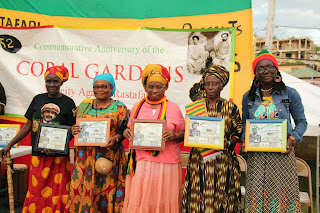
Elder Empresses from Bad Friday Incidentt
The enslaved and colonized people of the America are credited with a unique cognitive, ethical and social agency in the face of a structure that presents different existential challenges to the ability of the Caribbean people to realize their person-hood and live a worthwhile life. The Caribbean people have always possessed agency and have used this to overcome existential challenges at different phases of their history. The question whether they have always succeeded in doing this is a different question.

Rastafari as a manifestation of African retention is the memory of the Jamaican people and is the reminder to the children of enslaved people of who we were and where we are going. Rastafari retains African philosophy and philosophical threads in the Caribbean ethos. In our current circumstance Rastafari works to prod, rattle and rethink our thinking (Unlearn), to current our "Miseducation" as Lauryn Hill put it, a "miseducation" that has lead to systemic disinformation and misinformation in the west. Rastafari serve to inform and change our practices as humans in institutions, politics, and the personal, legal and social paradigms. Rastafari via livity (lifestyle) demonstrate how African, Aboriginal, native ideology and ethos be can used for transformation of existence, anti-racism and critiques of alterity, resistance, pedagogy as well as political action. Rastafari is living philosophy which maintains the cognitive link from African phenomenological and spirituo-analytical traditions via African retention, yet it also carries on the modern philosophical quests and issues of modern black existentialists. A philosophy that vivifies a culture, a region, music, arts and religion. Rastafari activists, academics and actors can be found at the vanguard of discourse on decoloniality, reparations, the politics of race, gender and identity, among others.

"The power of philosophy floats through my head, Light like a feather, heavy as lead"
—Bob Marley

"Emacipate yourselves from mental slavery, none but our self can free our minds"
~Bob Marley

"Babylon gi dem a ride fi dem money get dem funny, and den brainwash dem pon dem western journey"
~Sizzla Kalonji

In Black Skin, White Masks, Fanon argued that the colonial situation created an “existential deviation” in the psyche of the Afro-Caribbean. This deviation was the result of racially induced “aberrations of affect” that relocated the Afro-Caribbean in an antiblack world from which he or she must be extricated. I n I contend Rastafari is the movement that engenders that extrication. If one takes a hermeneutical, phenomenological approach to the Sacred Scriptures emerging from Rastafari then one will see that it is a “Third World” Liberation Theology. Rastafari theology focuses on a postcolonial interpretation and reimagination of rituals. The adoption in Rastafari livity of the Bible and of apocryphal books such as the Kebra Nagast, The Holy Piby, and The Promised Key explores the meaning of Black identity and of Liberation Theology.

The usage of the term "Babylon" in Rastafari liberation discourse is distinct from the exodus motif normally associated with theologies of liberation. This usage comes mainly from Marcus Garvey's notion of a "Black Zionism" that pictured Zion as a place of restoration. In its usage in the prophetic books of Jeremiah and Isaiah, Zion serves as the foil for Babylon and in many instances the two topoi are paired. The Rastafari reading of the biblical texts, more so the prophets and not the book of Revelation, generated the notion of Babylon as the evil empire; any place outside of Africa as Babylon, and the British Empire as Babylon with Zion as its counterpoint. Rastafari repurposes the dark matters of existence in Babylon– anxiety, depression, despair, death – into the service of self-flourishing idea of Zion.

My Black Existential Reading List:

  • The Souls of Black Folk  -  William Edward Burghardt Du Bois
  • Black Skin, White Masks  -  Frantz Fanon
  • Toward the African Revolution  -  Frantz Fanon
  • Eight Men: Short Stories  -  Richard Wright
  • Existentia Africana  -  Lewis R. Gordon
  • Notebook of a Return to the Native Land  -  Aime Cesaire


This article explores the intersection of #Existentialism and #Rastafari philosophy, delving into topics such as #Philosophy, #Spirituality, #PersonalGrowth, #Identity, #Consciousness, #ExistentialCrisis, #SelfDiscovery, #IndividualFreedom, #SocialJustice, #Ethics, #Morality, #ExistentialDread, #Redemption, #ExistentialAngst, #Enlightenment, #InnerPeace, #SelfRealization, and #UniversalLove.