Newsticker

Loading Rastafari news...

Wednesday, April 15, 2026

Top Ten Little-Known Facts About Rastafari

Beyond the Locks: 10 Surprising Truths About Rastafari Philosophy

Most people associate Rastafari with reggae rhythms and the image of Bob Marley. However, for millions of believers from the hills of Jamaica to the streets of Ethiopia, it is a sophisticated liberation philosophy and a way of life rooted in resistance. Rastafari is far more than the stereotypes of reggae music and nappy natty dreadlocks. For millions of warriors worldwide, it is a profound and intricate liberation philosophy with a rich history.

From secret mountain communes to "Ital" lifestyle to the hidden history of women's leadership, here are ten little-known facts about the history and culture of Rastafari.

1. The Three Popular Mansions of Rastafari

Rastafari is not a single, unified organization. It in modernity can be considered to be comprised of three primary "Mansions" (denominations), each with unique traditions:

  • Nyabinghi: The oldest mansion, focusing on traditional drumming and chanting.

  • Bobo Ashanti: Known for wearing tightly wrapped turbans and robes, following strict Mosaic Law.

  • Twelve Tribes of Israel: The most progressive branch, which welcomes all races and does not mandate dreadlocks.


2. The "Ital" Diet: More Than Just Veganism

The Ital diet (derived from "vital") is a spiritual practice designed to increase Livity—life energy. Ital followers typically avoid salt, chemicals, and processed foods. While many are strictly plant-based, the core principle is eating food "from the earth" to keep the body a clean temple for Jah.

3. The Hidden Role of Rastafari Women

While history books often highlight male leaders, women like Tenneth Bent were foundational. These women served as financial backers and organizers for the Ethiopian Salvation Society and were instrumental in managing the early outreach programs that provided food and clothing to the poor in the 1930s. Coincidentally it is also a little known fact that the word Nyahbinghi is rooted in womanhood and femininity.

The African Roots: The "Mother of Abundance"

  • The word originates from the Kinyarwanda/Kirundi languages of East Africa (specifically Rwanda and Uganda). 
  • Etymology: It is widely believed to mean "the one who possesses many things" or "mother of abundance." 
  • The Legend: It was originally the name of a legendary African queen or deity. In the 19th and early 20th centuries, the "Nyabinghi cult" became a powerful anti-colonial movement. 
  • The Warrior Spirit: A famous medium named Muhumusa claimed to be possessed by the spirit of Queen Nyabinghi, leading armed resistance against German and British colonialists in Uganda. Because of this, the name became synonymous with unyielding resistance against oppression.

4. Pinnacle: The First Rasta Commune

The movement’s heart was forged at Pinnacle, a self-sufficient community established in 1940 by founder Leonard Howell. Located in the St. Catherine hills, this "Lost Paradise" housed over 700 followers who lived entirely off the land before it was destroyed by colonial authorities.

As of April 2026, the story of Pinnacle has shifted from a history of displacement to a formal mission for heritage preservation. Here is the summary of what is happening right now:

  • Official Heritage Protection: In late March 2026, the Jamaican Government reaffirmed the declaration of six specific lots at Pinnacle in Sligoville as a National Heritage Site. This legally protects the core historical area from being bulldozed for private housing. 
  • Reparative Justice: This move is part of a broader government effort to make amends for past state persecution. It follows the recent handover of land titles to Rastafari elders in St. James as restitution for the 1963 Coral Gardens incident. 
  • The Development Plan: The vision for the site is to move beyond ruins. Plans are in motion to create a Pinnacle Monument and an Entrepreneurial Village, designed to be a center for heritage tourism and a space where the community can practice traditional "Ital" self-sufficiency. 
  • Ongoing Legal Battles: While the government has secured specific lots, the Leonard P. Howell Foundationcontinues to fight for the return of more of the original 500-acre estate, specifically focusing on the sacred burial grounds of early leaders. 
  • Cultural Significance: This is a major victory for the movement. For the first time, the state that destroyed the commune in 1954 is now acting as its legal guardian, recognizing it as the true birthplace of the Rastafari movement.

5. The Ongoing Exodus to Shashemene

Repatriation to Africa isn't just a symbolic hope; it is a physical reality. Since the 1960s, a community of Rastafarians has lived in Shashemene, Ethiopia, on land granted by Emperor Haile Selassie I. This settlement remains a living bridge between the Caribbean and the African continent.

6. The Meaning of Red, Gold, and Green

The iconic colors are borrowed from the Ethiopian flag and carry deep Pan-African symbolism:

  • Red: The blood of martyrs shed for Black liberation.

  • Gold: The mineral wealth and prosperity of Africa.

  • Green: The lush vegetation and the "Promised Land."

7. Nyabinghi: The True Root of Reggae

Before ska and reggae took over the airwaves, there was Nyabinghi drumming. Using three specific drums—the bass, fundeh, and repeater—this hypnotic music was created for "groundation" ceremonies. These ancient African rhythms are the literal heartbeat of modern Jamaican music.

8. Ganja as a Holy Sacrament

In Rastafari, cannabis (Ganja) is never viewed as a recreational drug. It is referred to as the "Holy Herb" or "Wisdom Weed," used during "reasoning" sessions to clear the mind and commune with Jah. Interestingly, while Ganja is sacred, alcohol is strictly forbidden, viewed as a tool of "Babylon" (the oppressive system).

Ancient Origins

The word is Sanskrit in origin (gañjā), referring to the resinous flowering tops of the hemp plant. It is traditionally linked to the Ganges River (Ganga) in India, where the plant grew wild and was used in sacred Hindu rituals dedicated to the god Shiva.

  • Source: Sanskrit/Hindi (Gañjā). 
  • Path: India ➔ British Indentured Labor ➔ Jamaican Plantations.
  • Modern Meaning: A sacred spiritual tool for the Rastafari and a staple of Jamaican cultural identity.

9. Who is Ras Tafari?

The movement's name is taken from Ras Tafari Makonnen, the birth name of Emperor Haile Selassie I. "Ras" is an Amharic title for Prince or Duke. To Rastas, the Emperor’s 1930 coronation fulfilled the biblical prophecy of a "King of Kings" arising in Africa.

10. Marcus Garvey: The Movement’s Prophet

Jamaican National Hero Marcus Garvey is revered as the movement’s prophet. His 1920s message—"Look to Africa, when a black king shall be crowned"—is seen as the direct prediction of Haile Selassie’s rise. To many, Garvey is the "John the Baptist" to the movement's Messiah.


Why This Matters Today

Understanding Rastafari is key to understanding Jamaican identity and the global struggle against colonialism. It remains one of the world's most vibrant and misunderstood spiritual movements.

Want to learn more about Jamaican history? Check out our latest posts on Rastafari Today!

Monday, April 6, 2026

The Rastafari Economic Cooperative

From Mount Zion to Montego Bay: The Rasta Cooperative Mandate for 2025 and Beyond

A Call to the Brethren and Sistren of the Second City


I speak to you from the heart of Montego Bay—to the elders in the hills of Flankers, the craftsmen on the Hip Strip, the growers in the pastures of St. James, and the faithful in every yard. For too long, we have watched as the system of Babylon cycles through our island: promises made and broken, tourism dollars that don’t touch our communities, and a political tribalism that leaves our people in the same state of want. The time for watching is over. The year 2025 was not just another year on the calendar; it was a divine signal. The United Nations has declared it the International Year of Cooperatives, under the theme “Cooperatives Build a Better World”. This global recognition is a tool for us. It is a framework for what Rastafari has always been: a communal, self-sufficient, and sovereign people. This is our year to organize not just as a faith, but as an economic and political institution.

The Cooperative Crown: Aligning Rastafari with a Global Mandate

A cooperative is more than a business; it is an expression of collective will. It is owned and controlled by its members, and its benefits are shared among them. Is this not the very essence of “One Love, One Heart”? Is this not the practical application of “I and I”?

The UN has laid out clear objectives for 2025 that read like a Rasta manifesto:
  • To raise public awareness of how cooperatives drive sustainable development.
  • To promote growth by strengthening the entrepreneurial ecosystem.
  • To advocate for supportive legal and policy frameworks.
  • To inspire leadership and engage youth.

This is our opening. The world is acknowledging that the top-down, exploitative model of Babylon has failed. The cooperative model, rooted in community and equity, is being uplifted as the alternative. Rastafari must step into this space not as followers, but as pioneers. We have lived this philosophy for generations. From the early self-sufficient community of Pinnacle to our village structures today, the blueprint exists. Now, we must systematize it, scale it, and wield it for the liberation of our people.

The Mathematics of Liberation: $1 Million a Month in Our Hands

Let us reason with numbers, for vision without substance is a mirage. I propose a simple, powerful commitment: **One thousand Rastafari, each contributing one thousand Jamaican dollars per month.**

The Collective Power:
  • Monthly Pool: 1,000 x JMD $1,000 = JMD $1,000,000
  • Annual Pool: JMD $12,000,000 (Twelve Million Dollars)

This is not charity. This is a sovereign investment fund, owned by us, governed by us. Managed through a transparent Rasta cooperative, this fund becomes a mighty river to nourish our community in three sacred areas:

1. Community Welfare & Resilience (JMD $4M/year)
This fund is our social safety net, addressing the “severe fiscal constraints” that leave government programs lacking. It provides:
  • Elder Care: Honor for our living libraries of wisdom.
  • Health Grants: Support for herbal treatments and emergency medical costs.
  • Disaster Relief: A rapid-response fund for our villages, so we are never again solely dependent on outside aid when hurricanes strike.
  • Legal Defense: Protecting our brethren from unjust persecution.

2. Sacred Education & Youth Development (JMD $4M/year)
With unemployment high and education systems struggling to make our youth globally competitive, we must build our own institutions. This fund supports:
  • Rastafari STEAM Workshops: Teaching coding (on Linux, the people’s software), sustainable agriculture, graphic arts, and ethical entrepreneurship.
  • Scholarships: For tertiary education in fields that serve community development.
  • Cultural Archives: Documenting our history, our music, our reasoning, and our language for generations to come.

3. Land Acquisition & Sovereignty (JMD $4M/year)
Land is the ultimate foundation of sovereignty. As Minister Ishmael Muhammad stated during the Million Man March preparations, “Land is a pathway to wealth… we cannot allow the Caribbean to become the playground of Europe, Asia and elsewhere.”. This fund enables:
  • The Cooperative Land Bank: Purchasing parcels in St. James, Trelawny, and beyond.
  • Sustainable Agriculture Projects: Moving from cultivation for the herb alone to full-scale organic farming to feed our communities and break dependency on imported foods.
  • Eco-Village Development: Creating sovereign spaces for living, worship, and enterprise.

The Political Groundation: Our Million Man March Moment

We must understand that economic power is the foundation of political voice. The historic 1995 Million Man March was a seismic display of Black collective will—a statement that could not be ignored. Its commemoration came to Kingston because the Caribbean struggle is inseparable from the global Black struggle.

Imagine not just a march, but a permanent institution. Imagine a Rastafari Cooperative Congress that:
  • Registers our members and articulates our collective interests.
  • Engages with municipal councils in Montego Bay and across Jamaica on issues of land use, cultural rights, and economic development.
  • Presents a unified front to advocate for policies that support cooperative development, as encouraged by the UN resolution.
  • Moves us from being a “cultural stronghold” to becoming a policymaking force.

We are not seeking to become politicians in the tribalistic sense. We are building the political capacity to protect our way of life, our land, and our future. As voter turnout declines and trust in the political system wanes, we offer a different model: governance from the ground up, rooted in community and principle.

The Montego Bay Declaration: A Call to Organized Action


Brethren and Sistren, the spirit of Marcus Garvey—who called for economic self-reliance and a return to African dignity—is alive in this proposition. The acknowledgment of Haile Selassie I is not just spiritual; it is a call to build a societal order reflective of Zion.

Here is the first step: Let us gather. Not just to reason, but to resolve. Let us form the founding committee for the Montego Bay Rastafari Cooperative Union (RCU). Let us draft our bylaws, open our collective bank account, and begin the work of registering under Jamaica’s Cooperative Societies Act.

The UN has given the world the theme for 2025: “Cooperatives Build a Better World”. Let Jamaica and the world see that Rastafari is ready to lead in building that better world right here, starting in Montego Bay. Let us show them the power of a people united by faith, organized by principle, and empowered by their own resources.

One thousand of us. One thousand dollars each. One million steps toward our liberation every month. The math is simple. The mission is sacred. The time is now.

In love and solidarity,

Yannick Nesta Pessoa
Writer, Artist, Community Advocate
Find me on Twitter & Instagram: @yahnyk
Montego Bay, Jamaica


Friday, April 3, 2026

Earth's Most Strangest Man


The Earth’s Most Strangest Man
A provocative and mysterious work that reflects the radical religious imagination circulating in early Rastafari circles. Part polemic, part prophecy, this text challenges colonial Christianity and pushes readers toward a more African-centered interpretation of divine history.
Click the image to read the full document.

The Earth's Most Strangest Man

A Review


The radio and television are abuzz with talk of World War III and Iran and Trump, street corners rage with debate about global politics. So escape the noise and clutter I beg thee, that you may sit with Planno’s manuscript on a verandah in Montego Bay as I do, hearing Spanish speaking neighbours new to the community walk by on their way to the community shop or maybe you have the luxury of a good view and are watching the cruise ships drift past, But whatever you do, know that the real Jamaica simmers below the tourist line and you realize that Planno's work isn’t just scholarship—it’s testimony. The Earth Most Strangest Man arrives like a letter from a wise older head who happens to be your uncle, your teacher, and your prophet all at once. Written in 1969, when the island was still shaking off the performance of independence and finding its feet in a world that wanted to reduce Rastafari to a soundtrack, Planno’s work reads less like a textbook and more like a reasoning that got too heavy for the yard and had to be put down on paper before the wisdom escaped.

Today we as Rastafari stand at a crossroads as we watch Cuba, the birthplace of Planno suffer the wrath of America's imperial plan and the newly dubbed Donroe Doctrine. So it is no small thing to note that Planno stands at a peculiar crossroads—he’s the man who walked with Haile Selassie I in 1966, who helped steady the crowd when the Lion landed at Palisadoes, who mentored Marley, and who went on the 1961 Mission to Africa when repatriation was still a concrete plan rather than a metaphor. Because of this, his writing carries a weight that theoretical treatises simply can’t capture. He isn’t observing Rastafari from outside; he’s mapping the terrain from within, navigating between the theological urgency of the Nyabinghi grounds and the cold pragmatism of diplomatic halls. When he writes about Selassie, it isn’t abstract Christology—it’s the theology of a man who stood three feet from the King and felt the earth shift. He traces the titles—“King of Kings, Lion of Judah”—not as academic footnotes but as living evidence, proof that the God of the oppressed chose to manifest in Black royalty precisely when the world was busy denying Black humanity.

What strikes you most, reading this in Montego Bay where the hills still remember the Coral Gardens massacre and where police harassment remains a background hum, is how Planno refuses to let slavery remain in the past. He insists it shape-shifts: from the ships to the banks, from the whip to the curriculum, from the plantation to the political party headquarters. It’s a four-headed beast—chattel, economic, mental, and political—and he names it clearly enough that a youth in Flankers or a elder in Granville can recognize the pattern without needing a sociology degree. When he critiques the PNP and JLP, he isn’t just picking sides; he’s showing how both manage the same colonial estate, just with different color paint. The brown elite still hold the keys, the economy still feeds the former master, and independence remains a costume ball where the chains got lighter but didn’t vanish.

Planno’s structure mirrors how we actually talk—circular, returning, building. He moves from scripture to personal memory to political prophecy without warning, because that’s how truth arrives in a reasoning session. One moment he’s decoding Revelation through Ethiopian eyes, rejecting the missionary interpretations that taught us to hate ourselves; the next he’s detailing the 1961 Mission’s failures, the Shashamane land grants that the government tried to sabotage, or the internal fractures within the movement itself. He doesn’t hide the tensions—between those who want to fly to Africa tomorrow and those who believe we must heal Jamaica first, between the locksmen and the house Rastas, between the dreamers and the diplomats. It’s honest work, vulnerable even, which is rare in writings about faith.

The language itself breathes resistance. Planno writes in English that hasn’t forgotten its Creole roots—straight enough that the message carries, but rhythmic enough that you hear the drums underneath. When he uses “I and I,” it’s not a gimmick; it’s the theological spine of the whole piece, the understanding that divinity sits within the person, that the individual and the collective share one breath, that we are all fragments of the same sacred whole. It’s a grammar of unity in a world designed to separate.

For those of us trying to hold both the academy and the community—writing papers by day and attending groundation by night—Planno offers a blueprint for integrity. He demonstrates that you can analyze neocolonial economics while acknowledging that prophecy is real data. You can critique the movement’s internal contradictions without betraying it to Babylon’s cameras. The manuscript’s physicality, even down to the multi-colored ink he used, suggests that this knowledge is alive, color-coded, refusing to be standardized into the black-and-white of colonial print.

Reading him now, with all the hindsight of reggae’s globalization and the ongoing struggle for reparations, his warnings about neo-colonial politics feel almost painfully prescient. He knew that political independence without economic and psychological liberation was just a changing of the guards. He understood that repatriation had to happen in the mind before it could happen at the airport—that Zion is as much a consciousness as a coordinate.

So when we talk about Planno in the yards today, we’re not just citing a historical figure. We’re acknowledging an elder who managed to put the thunder of Trench Town into sentences without losing the thunder. His work reminds us that Rastafari isn’t a museum piece for tourists to photograph; it’s a continuous, difficult, beautiful argument with history, demanding that we recognize the “strangest” perspectives often contain the truest truths. For the bredren in the university library and the sistren selling ital stew by the roadside, his voice bridges those worlds—not by watering down either one, but by showing that deep thought and rooted culture have always been the same conversation.

Sunday, March 8, 2026

Garvey and Rastafari: A Family Dispute, Not a Disowning

Look, I need to say something about this Marcus Garvey and early Rastafari business, and I'm going to say it plain.

You see this picture making the rounds? The one showing Garvey calling early Rastas "religious fanaticism" while Rastas called him "The Apostle"? People love to post this like it's some kind of "gotcha" moment. Like we're supposed to pick sides. Like we have to choose which ancestor to love and which to leave behind.

I say: this is a family dispute. And we need to start treating it like one.


---

The Facts on the Ground

Let me give you what happened, because the history matters.

Marcus Garvey, born in St. Ann's Bay, Jamaica, in 1887, built the Universal Negro Improvement Association (UNIA) into the largest mass movement of Black people in history . His message was simple: Africa for the Africans, racial pride, self-reliance, and eventually, repatriation. When he spoke, people listened. When he organized, people moved.

The early Rastafarians—Leonard Howell, Archibald Dunkley, Joseph Hibbert, and others—came directly out of Garvey's orbit. Howell had been a Garveyite in Harlem during the early 1920s . Shepherd Athlyi Rogers, who wrote The Holy Piby (often called the "Blackman's Bible"), revered Garvey so deeply that he formally pronounced him an "apostle" in that text . When Haile Selassie was crowned Emperor of Ethiopia in November 1930, these Garveyites saw the fulfillment of something they'd been waiting for. Here was a Black king, sitting on a throne tracing back to Solomon and Sheba, ruling the only African nation that had successfully defended itself from European colonization .

They connected dots that Garvey himself had sketched: the Ethiopianist tradition reaching back through centuries of Black preaching, the Psalms verse about "Ethiopia shall soon stretch out her hands unto God," the call to "look to Africa" where a king would be crowned .

But here's where it gets messy.

Garvey wanted nothing to do with them.

In 1932 and 1933, writing in his newspaper The New Jamaican, Garvey attacked what he called "curious religious cults" driven by "ignorance and superstition" . He barred Leonard Howell from selling photographs of Haile Selassie at UNIA headquarters in Edelweiss Park. By 1934, he was referring to the "Ras Tafari cult" with open contempt, and UNIA officials were calling for the island's intelligentsia to stamp out the movement entirely .

Old Garveyites who knew Howell from Harlem described him as a "con-man" and a "mystic man," and noted that Garvey had already declared against him in New York .

And it didn't stop with Howell. Garvey eventually took issue with Selassie himself. When Italy invaded Ethiopia in 1935 and Selassie was forced into exile, Garvey initially supported him. But when Selassie arrived in London and refused to meet with Garvey and other Black activists—turning instead to white officials and the League of Nations for help—Garvey felt the rejection keenly . He began writing editorials blasting Selassie for his weakness, for his lack of identification with ordinary Black people, for caring more about his Solomonic bloodline and his royal connections to England than about the masses who worshipped him .

Some say a meeting was supposed to happen in England. Some say Selassie canceled. Either way, by 1937, Garvey was being heckled off platforms in Hyde Park by African students enraged at his criticism of the Emperor .

So there you have it. The prophet disowned the prophecy. The father rejected the child.

---

So What?

Here's my question: So fucking what?

This is like watching your parents argue at the dinner table and thinking the whole family is falling apart. This is like hearing your grandfather say something backwards about your cousin's choices and deciding he never loved anybody.

Garvey came up in a certain way. Born in colonial Jamaica, built a movement in the United States, dressed in military regalia, marched down Lenox Avenue in a plumed hat. He learned to fight the master with the master's tools. Suit and tie. Corporate structure. Press releases. Political parties. That was his language, his armor, his way of surviving and striving .

Along comes Leonard Howell, dreadlocks and all, setting up a commune at Pinnacle in St. Thomas, growing ganja, teaching that the King of Ethiopia is God incarnate, telling people to let their hair grow and wait on repatriation. Howell wasn't trying to compete with Europe. He wasn't trying to prove Black people could be as good as white people. He was trying to be something else entirely—something self-determined, something that didn't need Europe's permission to exist .

Of course Garvey quarreled with him. Of course he didn't understand. Straight-laced dads never understand why their kids turn Rasta. That's what dads do. They worry. They fuss. They say "that's not my vision of civilization."

But here's the thing: Howell and the early Rastas didn't need Garvey's permission. They took what he gave them—the Pan-African vision, the call for redemption, the insistence on Black pride—and they ran with it. They carried it somewhere Garvey himself couldn't go. They clothed it in African spirituality instead of European respectability. They found a King who looked like them, not just a politics that spoke for them .

Garvey gave us the skeleton. Rastafari gave it breath.

---

What the Scholars Say

And this isn't just me talking. The scholars back this up.

Barry Chevannes, the great Jamaican sociologist, spent decades studying Rastafari. He wrote about the paradox: the most vocal and effective Pan-African religious presence in Jamaica drew from Garvey's ideas while Garvey himself rejected them . But he also showed how Rastafari emerged from deep wells of African retention—Revival, Kumina, Convince—that Garvey, in his suit-and-tie respectability, couldn't access .

Charles Price, in his study of Rastafari identity formation, documents how early converts in the 1940s understood Garvey's rejection: "Garvey, him really see him people start to take up and follow the Rasta people and from that him is very vexed" . They knew he was angry. They knew he didn't approve. They followed him anyway.

The Smithsonian's work on Ethiopianism traces how this identification with Ethiopia ran deeper than any individual leader. From the 18th century onward, Black people in the Americas had been reading Psalm 68:31—"Princes shall come out of Egypt; Ethiopia shall soon stretch out her hands unto God"—as a prophecy of Black redemption . Garvey stood in that tradition. Rastafari stood in that tradition. They were branches of the same tree, even if the branches scraped against each other in the wind .

And Barbara Bair, writing for PBS's American Experience, notes something crucial: despite the actual differences Garvey and Selassie experienced, "they have been lauded together and twinned spiritually in much of black popular culture and faith, and exist in important relationship to one another in Rastafarian belief, in the messages of reggae music, and in many other ways" .

The family stayed family, even when the parents fought.

---

What My Grandmother Taught Me

My grandmother had a saying: "We nuh fi wash dutty laundry a road."

Meaning: some conversations are for the family, not for the street. Some disputes are for the gathering, not for the enemy to see.

Every time I see this Garvey-Rasta discourse popping up online—especially in spaces where non-Black people are watching, commenting, using it to divide us—I think about my grandmother. She would look at this and say, "Why you a tell the whole world your parents' business?"

Because here's what happens: the enemy sees us arguing about whether Garvey was right or Howell was right or Selassie was right, and they miss the point entirely. The point is that we were having the argument. The point is that we were figuring out our destiny. The point is that in 1930s Jamaica, a group of poor Black people looked at the crowning of an African emperor and said, "This is our King. This is our God. This is our liberation." And another group of Black people, led by the greatest organizer we'd ever produced, said, "No, liberation looks like this instead."

Both were trying to free us. Both were trying to get us home. They just had different maps.

This is not a debate for Facebook, for the curious gaze of people who don't share our struggle. This is dialogue for the binghi meeting. This is discourse for the family gathering. This is us sitting in a circle, passing the reasoning, figuring out together what our elders meant and where we go from here.

---

What We Do With What They Gave Us

Here's my take, and I'll keep it simple:

Garvey gave us economic vision. He gave us political organization. He gave us the Black Star Line, the Negro Factories Corporation, the UNIA, the cry of "Africa for the Africans." When Kwame Nkrumah named Ghana's shipping line the Black Star Line, he was honoring Garvey. When Jomo Kenyatta led Kenya to independence, he was walking a path Garvey helped clear . That stuff matters. That stuff still feeds us.

The early Rastafari gave us something else. They gave us spiritual self-determination. They gave us a God who looked like us, not just a politics that spoke for us. They gave us dreadlocks and ital living and a critique of Babylon that went all the way down to the bone. They gave us a way to be African in the West without apologizing, without explaining, without dressing it up in somebody else's clothes .

Bob Marley gave us the music that carried both—Garvey's fire and Rasta's faith—to every corner of the earth. When he sang "Redemption Song," he was channeling Garvey: "Emancipate yourselves from mental slavery, none but ourselves can free our minds." When he sang "Rastaman Vibration," he was channeling Howell and the Pinnacle elders. He didn't choose. He took the best of both and made something new .

That's what we do. That's what we've always done.

We take what our parents and grandparents gave us—all of them, even the ones who argued—and we make the most of it. We pick the best out of what they left us and we build with it. We don't throw any of them away because they had a "minor dispute." We don't disown Garvey because he couldn't see what Rastas saw. We don't disown the early Rastas because Garvey called them fanatics.

We honor them both. We learn from both. We take the DNA from both sides of the family and we make something that carries us forward.

---

A Better Way to See It

Think of it like this:

Garvey is the father who worked three jobs, who wore the suit, who learned the system, who taught you to read and count and organize. He wanted you to succeed on the world's terms because that's how he survived. He couldn't always understand why you wanted to grow your hair, why you talked about Zion, why you didn't care about fitting in. But that doesn't mean he didn't love you. That doesn't mean he didn't prepare the ground you're walking on.

The early Rastas are the uncle who left the city, went back to the country, started farming, started praying different, started living by different rules. He seemed strange to the suit-and-tie folks. They said he was crazy, that he'd lost his way. But he was actually finding it. He was reaching back to something older than suits and ties, older than colonial respectability, older than the slave ship.

And you? You're the child who gets to sit at both tables. You get Garvey's discipline and the Rasta's freedom. You get the UNIA's organization and Pinnacle's spirituality. You get the suit when you need it and the locks when you want them. You get to decide.

That's not a contradiction. That's inheritance.

---

What I'm Saying

So here's what I'm saying, plain and simple:

Stop letting people use this history to divide you. Stop acting like you have to choose between Garvey and Rasta, between Pan-Africanism and Ethiopianism, between the father and the uncle. They were both ours. They both loved us, even when they didn't love each other's choices. They both fought for us, even when they fought each other.

If Garvey was harsh with Howell, if he wrote those editorials, if he eventually criticized Selassie—so what? That's what family does. That's what happens when people care deeply about the same thing and see different paths to get there. The argument itself proves how much they cared.

And if Selassie snubbed Garvey in London, if that meeting never happened, if the Emperor had his own limitations and his own bloodline preoccupations—so what? That's what leaders do. They disappoint you. They fail you. They turn out to be human. That doesn't mean you throw away everything they represented.

My advice? Take what they gave you. Take Garvey's economic vision and political strategy. Take the Rastas' spiritual depth and cultural self-determination. Take Selassie's dignity and his throne, even if you don't take his politics. Take Bob's music and his message. Take it all, mix it together, and make something that feeds you and your children and your children's children.

And for the love of God, stop washing this dirty laundry in public. Stop letting the enemy watch us argue about who was right and who was wrong. This is family business. This is for the gathering, for the reasoning session, for the circle where we pass the chalice and figure it out together.

Because here's the truth: our parents and grandparents did enough. Garvey did enough. Howell did enough. Selassie did enough. They got us here. They got us alive, aware, still fighting, still hoping.

Now it's up to us to do the rest.

---

Selah. Heart o'love. Forward forever.

❤️🖤💚

💚💛❤️

---

References

*   Chevannes, B. (2011). "8 Ships that will never sail": The paradox of Rastafari Pan-Africanism. *Critical Arts*, 25(4), 556-575.

*   Bair, B. (n.d.). Marcus Garvey and Haile Selassie. *American Experience, PBS*. Retrieved from PBS.org.

*   Wikipedia contributors. (2006, November 9). Rastafari. In *Wikipedia, The Free Encyclopedia*. Retrieved 08:44, April 6, 2026, from https://en.wikipedia.org/w/index.php?title=Rastafari&oldid=86468107

*   Smithsonian Institution. (n.d.). *Dread History: The African Diaspora, Ethiopianism, and Rastafari*. Smithsonian Education. Retrieved from https://www.smithsonianeducation.org

*   Price, C. (2009). *Becoming Rasta: Origins of Rastafari Identity in Jamaica*. NYU Press.

*   Hopkins, D. N., & Antonio, E. P. (Eds.). (2012). Black theology in Jamaica. In *The Cambridge Companion to Black Theology*. Cambridge University Press.

*   Jamaica Information Service. (2022, August 16). 'Africa for Africans' – Garvey's Message of African Nationalism and its Impact. Retrieved from https://jis.gov.jm

*   Randon, T. (2007, October). Fi Wi Story. *New Statesman*. Retrieved from https://www.newstatesman.com

Thursday, February 27, 2025

7 Spiritual Books for Free Online

7 Spiritual Books of Interest to Rastafari for Free Online

As the Rastafari movement is founded on a strong spiritual foundation, it is no surprise that their literature is often steeped in mysticism and theology. These seven free online books are of particular interest to those seeking spiritual enlightenment and a deeper understanding of the world around us. From the foundational texts of Christianity, Hinduism, and Taoism to more contemporary works on the nature of religious experiences, these books offer profound insights into the human condition that will be of interest to both Rastafari and any spiritual seeker, philosopher or theologian.

Here is a list of 7 popular and insightful spiritual literature that is available on Project Gutenberg to read online and/or download for free:


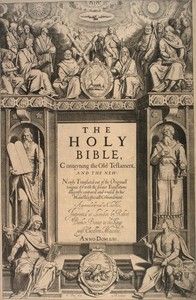
  1. The Bible - Various translations of the Bible, including the King James Version and the American Standard Version, are available on Project Gutenberg. The Bible is considered a foundational text for many spiritual traditions, including Christianity, Judaism, and Islam.

  2. The Tao Te Ching by Lao Tzu - This ancient Chinese text is a foundational text of Taoism, and is considered a masterpiece of spiritual literature. It is available on Project Gutenberg in various translations.


  3. The Bhagavad Gita - This ancient Indian text is a cornerstone of Hindu philosophy and spirituality. Several translations of the Bhagavad Gita are available on Project Gutenberg.


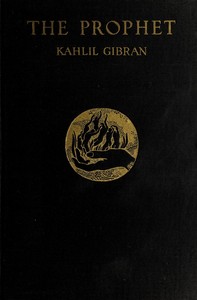
  4. The Prophet by Kahlil Gibran - This book of poetic essays is a classic of spiritual literature, and has been translated into over 100 languages. It is available on Project Gutenberg.


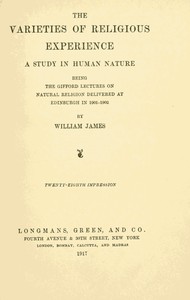
  5. The Varieties of Religious Experience by William James - This book is a classic of psychology and philosophy, and explores the nature of religious and spiritual experiences. It is available on Project Gutenberg.

     
  6. The Cloud of Unknowing - This medieval Christian text is a guide to contemplative prayer and has been influential in the development of Christian mysticism. It is available on Project Gutenberg.


  7. Autobiography of a Yogi by Paramahansa Yogananda - This book is a classic of spiritual literature, and recounts the author's experiences and teachings as a yogi and spiritual leader. It is available on Project Gutenberg.


    In a world where technology and social media can leave us feeling disconnected and distracted, it's more important than ever to explore our spiritual sides. The seven books on this list, available for free on Project Gutenberg, offer insights into various spiritual traditions and provide a path for self-discovery and growth. Whether you're a Rastafari seeking to deepen your faith, a philosopher pondering life's big questions, or a theologian exploring the mysteries of existence, these books offer wisdom and guidance for all.

     These links will allow you to access and download the texts directly from Project Gutenberg.


    Learn more:

    1. The Project Gutenberg eBook of Devil Worship, by Isya Joseph, B.A., M.A., Ph.D..
    2. Bedouins | Project Gutenberg
    3. The Ways of Men

    #Rastafari #Spirituality #Literature #Philosophy #Meditation #Mysticism #Theology #FreeBooks #ProjectGutenberg #SpiritualReadingList #Gnostic #Enlightenment

Tuesday, February 25, 2025

Stylish Manifestations of African Heritage in the Home

A Radical Reclamation of Identity for Busy Black Parents

“Dad, imagine if our house was a temple or museum, like an archive of family history and black history and all the family members had to come here to remember… we'd probably have lots of reunions, don't you think?”

~Kyrha-Joy Pessoa

In the cacophony of modern life, where the rhythms of survival often drown out the whispers of heritage, the act of crafting a home that reverberates with the echoes of Africa is not merely an aesthetic endeavor. It is an act of resistance, a quiet rebellion against the erasure of our stories, our struggles, and our triumphs. For the Black Jamaican parents and Rasta parents navigating the labyrinth of contemporary existence, the home becomes more than a shelter—it transforms into a sanctuary of memory, a living testament to the resilience of a people who have endured, adapted, and thrived against the weight of history.


To infuse the spirit of Africa into the fabric of our daily lives is to reclaim what has been stolen, distorted, or buried. It is to say to our children, in every corner of our homes, *this is who you are, this is where you come from, and this is why it matters.* It is to create a space where history is not a distant relic but a vibrant, breathing presence. Here, then, are some ways to weave the threads of African heritage into the tapestry of your home, transforming it into a space that is both deeply personal and profoundly political.

---


My Experiences Growing Up in African Aesthetic

"A people without the knowledge of their past history, origin, and culture is like a tree without roots." 

– Marcus Garvey

I was born in 1981 in Montego Bay, Jamaica, into a world where the echoes of Africa were never distant, where my childhood was shaped by the rhythms, the philosophy, and the aesthetics of a continent I had never seen but always felt. My grandmother, a proud woman deeply rooted in the teachings of Marcus Garvey’s UNIA, carried the fire of Pan-Africanism in her bones. My parents, too, carried that torch, ensuring that I never grew up believing the lie that Christopher Columbus had “discovered” Jamaica. History, for us, was not something to be dictated by colonial narratives—it was something we reclaimed. They named me Yannick, after the great Yannick Noah, his spirit of defiance and triumph a fitting aspiration. My middle name, Nesta—perhaps Nestor, depending on which parent you asked—was a reflection of their indecision between a Bob Marley tribute or a nod to the Greek sage of wisdom. But what was clear, beyond any name, was the foundation they laid for me: a childhood steeped in African identity, even while standing on Jamaican soil. Reggae was the heartbeat of our home, but alongside Bob, Peter, and Bunny, there were the haunting harmonies of Miriam Makeba, the triumphant horns of Hugh Masekela, and the layered rhythms of Ladysmith Black Mambazo. Graceland by Paul Simon played often, its African sonic aesthetic blending seamlessly with the reggae basslines that framed my childhood. And then there was The Police—a band that, though not African, carried echoes of that same percussive heartbeat in songs like Walking on the Moon. Music wasn’t just entertainment; it was an education, a bridge to a world that was stolen from us yet never truly lost. On television, I watched Roots and Shaka Zulu, their dramatized retellings of our history igniting a fire in me—an anger, yes, but also a deep pride. The Cosby Show gave me a different kind of Black excellence, a vision of success and family life that felt both aspirational and affirming. But it was the small things, the everyday aesthetics, that shaped my consciousness most: the wooden figurines with nappy hair that stood proudly on our shelves, hair kinkier than mine, challenging the beauty standards imposed by colonialism. I longed to be closer to that aesthetic, to see in myself the reflection of those figurines, of those ancestors. In 1980s Jamaica, embracing an African identity was both nostalgic and radically forward-thinking. The country itself was in flux—politically, culturally—straddling the lingering shadows of colonial influence and the fiery resistance of the post-independence generation. While many still clung to European ideals, my family stood firm in the belief that looking back to Africa was the only way to move forward. It wasn’t just a romantic notion; it was a way of life. One that shaped me, one that still lives in me.

---

The Radical Power of Everyday Objects: Tea Towels as Cultural Artifacts

In a world that often reduces African identity to a monolith, the act of reclaiming the mundane—of turning the ordinary into the extraordinary—becomes a radical gesture. Consider the humble tea towel, an object so often relegated to the drudgery of domestic labor. In the hands of a Pan-African parent, it becomes a canvas for cultural expression, a silent yet potent declaration of identity.


Seek out tea towels adorned with Adinkra symbols, those intricate Ghanaian emblems that carry within them the wisdom of generations. Each symbol—be it *Sankofa*, urging us to return and retrieve what has been lost, or *Gye Nyame*, proclaiming the supremacy of the divine—becomes a lesson, a mantra, a reminder of the values that have sustained us. Or perhaps opt for the bold, geometric patterns of Ndebele art, a visual language that speaks of resistance and resilience. These towels, draped over oven handles, hung in bathrooms, or framed as art, are not mere decorations. They are fragments of a larger story, one that refuses to be silenced.

---

Walls That Speak: The Politics of Wall Art

The walls of a home are never neutral. They are the silent witnesses to our lives, the blank slates upon which we inscribe our identities. For Black parents, these walls can become a powerful medium for storytelling, a way to assert our presence in a world that often renders us invisible.


Choose wall art that speaks to the complexity and richness of African heritage. Bold, abstract designs that echo the rhythms of the continent; portraits of figures like Marcus Garvey, Wangari Maathai, or Chinua Achebe, whose lives and works remind us of the power of resistance and imagination. Seek out the works of local Black artists, whose creations are not only beautiful but also imbued with the urgency of lived experience. By supporting these artists, you are not just decorating your home—you are participating in a larger ecosystem of cultural preservation and economic empowerment.


Consider, too, the use of African masks, those enigmatic objects that carry within them the spirits of ancestors and the wisdom of traditions. But be mindful: these are not mere ornaments. Each mask has a story, a meaning, a context. Take the time to learn these stories, to share them with your children, to make them part of the living narrative of your home.

---

Textiles as Text: Weaving Culture into Comfort

Fabric is more than material; it is memory, it is meaning, it is metaphor. The vibrant colors and intricate patterns of African textiles are not just visually striking—they are carriers of history, each thread a testament to the ingenuity and creativity of a people.


Kente cloth, with its kaleidoscope of colors and patterns, is more than a fabric—it is a language. Each design carries a message, a proverb, a piece of wisdom. Use it to adorn your sofas, your beds, your chairs, turning everyday objects into vessels of cultural significance. Mud cloth, with its earthy tones and geometric designs, offers a different kind of beauty—one that is grounded, organic, and deeply connected to the land from which it comes.


But remember: these textiles are not just decorations. They are artifacts, each one a piece of a larger story. When you bring them into your home, you are not just adding color or texture—you are adding depth, meaning, and history.

---

Sculptures as Statements: The Power of Three-Dimensional Art

In a world that often reduces African art to the exotic or the primitive, the act of incorporating African sculptures into your home becomes a radical act of reclamation. These are not mere objects; they are embodiments of history, culture, and identity.


Bronze figurines that depict historical figures or everyday scenes; wooden carvings that capture the essence of African spirituality; calabash bowls that speak of the ingenuity of traditional craftsmanship—each of these objects carries within it a story, a meaning, a connection to the past. Place them on your shelves, your mantels, your tables, and let them serve as reminders of the richness and complexity of African heritage.


But be mindful of their placement. These are not just decorations; they are focal points, conversation starters, pieces of art that demand to be seen, to be understood, to be appreciated. Take the time to learn their stories, to share them with your children, to make them part of the living narrative of your home.

---


A Home as a Living Archive

Designing a home that honors African heritage is not about following a set of rules or adhering to a particular aesthetic. It is about creating a space that reflects your identity, your values, your history. It is about finding objects that resonate with you, that tell your story, that connect you to your roots.


Be bold. Be creative. Mix and match traditional and contemporary pieces. Use color, texture, and pattern to create a space that is uniquely yours. But above all, remember that this is not just about decoration. It is about reclamation, resistance, and resilience. It is about creating a home that is not just a shelter, but a sanctuary—a place where your children can learn, grow, and thrive, surrounded by the beauty and power of their heritage.


In the end, the home you create is not just a reflection of who you are—it is a statement of who you can be. It is a testament to the power of memory, the importance of history, and the enduring strength of a people who have always found ways to survive, to adapt, and to thrive. And in that, it is nothing short of revolutionary.


*Yannick Nesta Pessoa B.A. is Jamaica’s first blogger, a Social Advocate, Community Activist, Artist, and Philosopher. Follow me on Twitter & Instagram @yahnyk, on YouTube, and reply to yannickpessoa@gmail.com.*  


Now, go pour yourself a glass, fire up YouTube, search for African decor ideas and let the ideas flow. Happy Friday, and happy Black History Month. ❤️